Curly Hair Coloring: The Complete Guide to Beautiful, Healthy Color on Curls and Waves
If you've ever walked out of a salon with your curls looking limp, frizzy, or completely unraveled after a color service, you already know the frustration. Curly hair coloring is not the same as coloring straight hair, not even close. The techniques, timing, products, and even the way color is applied all need to be adapted for curls and waves. Yet so many colorists apply the same approach regardless of curl pattern, and the results can be genuinely discouraging.
The truth is, finding a stylist who genuinely understands both color chemistry and curl behavior is rare. Most colorists specialize in one or the other. And when those two areas of expertise don't meet, you end up with color that looks beautiful in the chair and falls apart the moment you leave, or worse, hair that's been chemically compromised in a way that takes months to recover from.
This guide was written for women who are done settling. Whether you have loose waves, bouncy ringlets, or tight coils, you deserve color that works with your curl pattern rather than against it. Inside, you'll find everything you need to understand about curly hair coloring, from how color interacts with curl structure to the techniques that preserve curl integrity, the products that make a real difference, and what a thoughtful, specialist approach to color actually looks like. Let's start at the beginning.
1. Understand Why Curly Hair Coloring Requires a Specialist Approach
Curly hair coloring is a specialty within a specialty. To do it well, a stylist needs to understand two fundamentally different disciplines, color science and curl biology, and know how they interact. Unfortunately, most salon training programs don't cover this intersection in meaningful depth, which is part of why so many curly-haired women have had disappointing color experiences.
Here's what makes curly hair fundamentally different when it comes to color services:
The Structure of a Curl Changes How Color Is Absorbed
Curly and wavy hair tends to have a more open, lifted cuticle layer compared to straight hair. This means color, especially lightening products, can penetrate faster and more unevenly. A colorist who doesn't account for this can easily over-process certain sections while underprocessing others, leading to patchy, inconsistent results. Porosity varies along a single curl strand, and different areas of the head can behave very differently during processing.
Curl Patterns Change How Color Looks on the Hair
This is one of the most visually interesting aspects of curly hair coloring. Because curls coil and overlap, they naturally create light and shadow. What looks like a solid block of color when the hair is wet reveals beautiful, multidimensional depth once the curl springs back into shape. This means a colorist who understands curls can use this natural dimensionality to their advantage: creating color results that look far more nuanced than they would on straight hair.
Application Technique Must Be Adapted for Curls
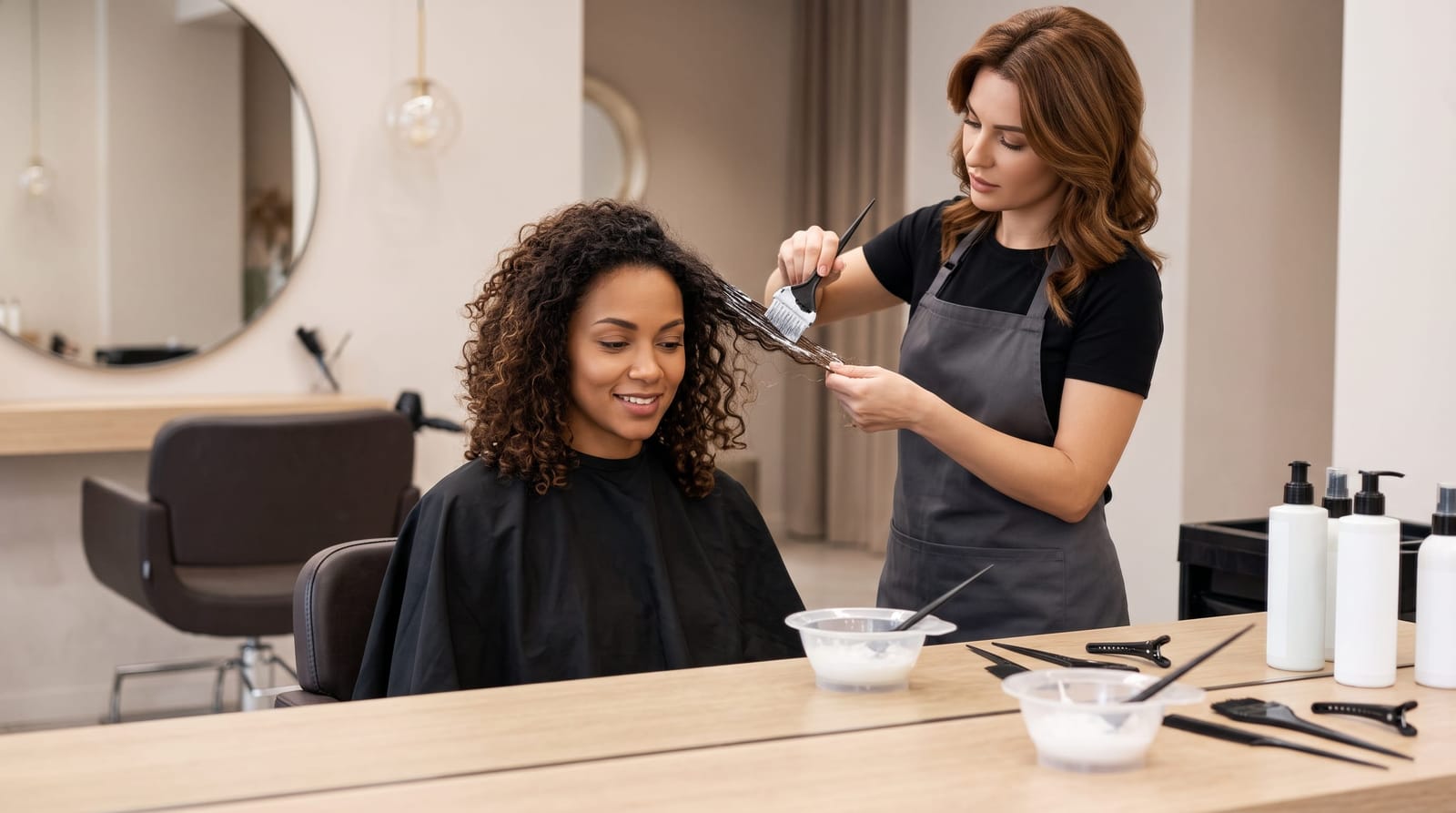
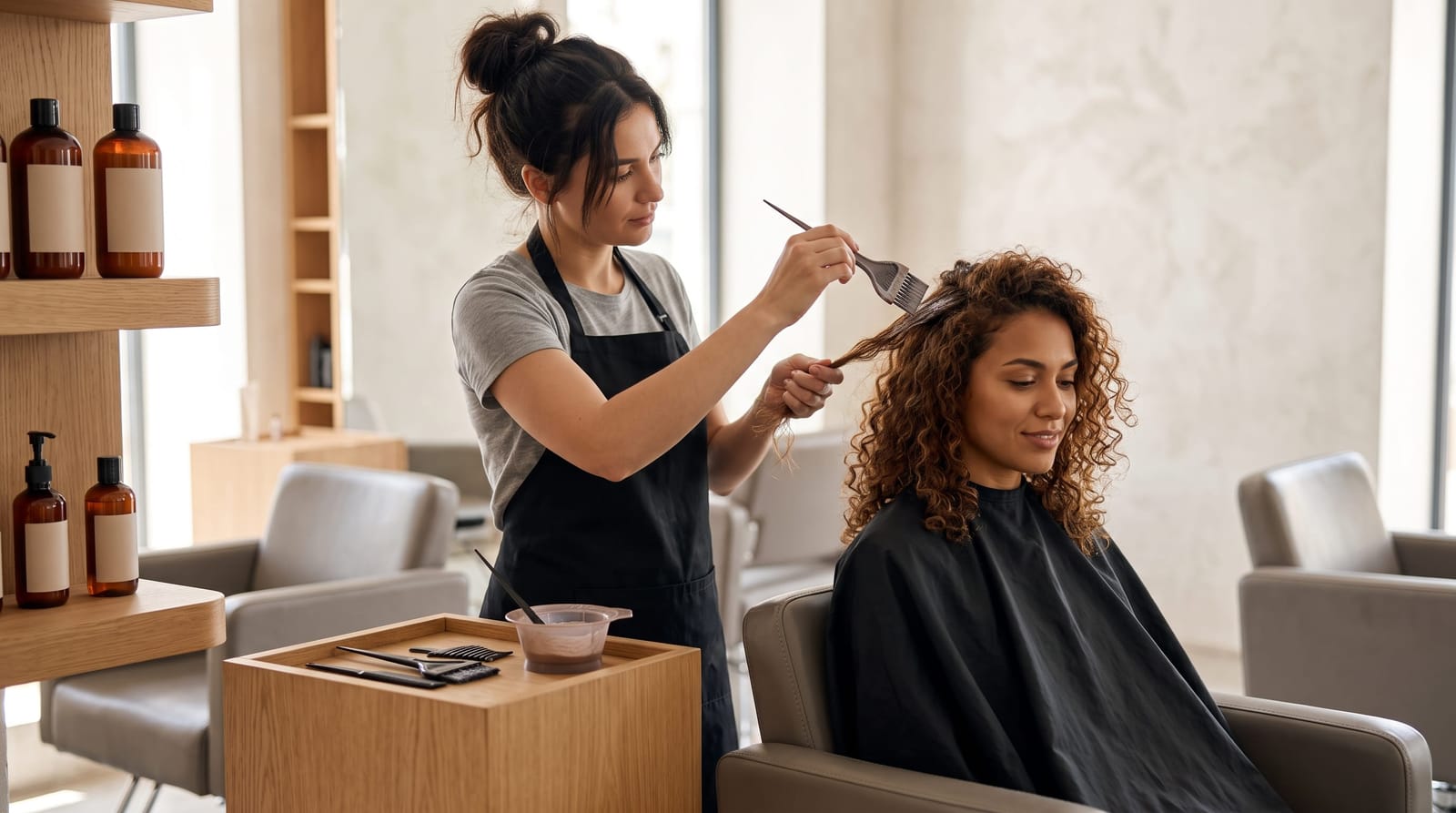
Applying color section by section, with precise brushwork designed for straight hair, simply doesn't translate to curly hair coloring. Sections need to account for how the curl will move and fall when dry. Placement matters enormously because highlights placed incorrectly on a curl can look choppy or disconnected rather than blended and natural. A curl-specialist colorist thinks about the three-dimensional movement of each section before ever picking up a brush or foil.
Choosing a stylist who treats curly hair coloring as its own distinct discipline, not just an afterthought, is the single most important decision you'll make before a color service.
2. Know the Safest Color Techniques for Preserving Curl Integrity
Not all color techniques are created equal when it comes to curly hair. Some approaches are inherently gentler and more forgiving of curl structure, while others carry a higher risk of compromising the elasticity and definition that make curls beautiful in the first place. Understanding the differences helps you walk into a consultation prepared to have a real conversation with your colorist.
Balayage and Hand-Painting for Curls
Balayage, the technique of hand-painting lightener or color onto selected sections of hair, is often one of the most curl-friendly approaches to coloring. Because it can be applied selectively and blended softly, it works beautifully with the natural movement of curls. The result tends to look sun-kissed and dimensional rather than stark or uniform, which suits most curly textures very well. When done by a colorist who understands curl movement, balayage for curly hair coloring can be absolutely stunning.
Gloss and Glaze Treatments
Semi-permanent color treatments like glosses and glazes are among the gentlest options available for curly hair coloring. They work by depositing color onto the surface of the hair rather than lifting the cuticle open, which means the structural integrity of the curl remains largely intact. A gloss can add beautiful shine, enhance your natural color, or refresh a fading color result, all with minimal stress on the hair. These are often a wonderful entry point for curly-haired women who are nervous about their first color service.
Highlights and Lowlights Placed With Curl Movement in Mind
Traditional foil highlighting can absolutely work on curly hair, but only when the placement is thoughtfully adapted. On curly hair, highlights need to be placed with the curl's natural movement in mind. Colorists who section curly hair as if it were straight often end up with results that look disconnected when the curl dries and bounces back. A curl-aware colorist will work with natural partings and curl groups to ensure highlights fall exactly where they'll be most visible and flattering.
What to Be Cautious About
Full-head permanent color with high-volume developer, overlapping chemical services, and at-home box dye applications are areas where curly hair coloring can go wrong most quickly. Box dyes, in particular, use a one-size-fits-all formula that doesn't account for porosity differences, curl type, or previous chemical history. The curl-specialist colorists at IlonaR Style in Marina Del Rey strongly advise against at-home color attempts for anyone with curly or textured hair: the variables are simply too complex to manage without professional training and a proper consultation.
3. Assess Your Curl's Porosity Before Any Color Service
Porosity is one of the most important, and most overlooked, factors in curly hair coloring. Simply put, porosity describes how readily your hair absorbs and retains moisture and chemical products. For color, this matters enormously because high-porosity hair will absorb color very quickly and may process faster than expected, while low-porosity hair can resist color penetration and require more careful technique.
What Causes Porosity Changes in Curly Hair
Porosity can be genetic, some curl types are naturally more porous than others, but it's also significantly influenced by previous chemical services, heat styling habits, and environmental factors. If you've had color or chemical treatments before, had your hair exposed to chlorine, or regularly use high heat without protection, your hair's porosity has likely been affected. This isn't necessarily a problem, but it absolutely needs to be factored into a curly hair coloring plan.
How a Specialist Uses Porosity Assessment
At IlonaR Style, every curly hair coloring consultation begins with a thorough assessment that includes evaluating porosity, curl pattern, density, and previous chemical history. This isn't just a quick glance: it's a meaningful conversation and hands-on evaluation that directly shapes which color techniques, formulas, and timing will be used. Treating every client's curls as unique rather than applying a standard formula is what separates curl-specialist coloring from a generic salon experience.
Balancing Porosity Before Coloring
When porosity is very uneven, common in curly hair that has been through multiple color services, a skilled colorist may recommend a bond-building or deep conditioning treatment before the color service. Helping to equalize porosity before application can make color results significantly more consistent and reduce the risk of patchy or uneven outcomes. This kind of preparation step is standard practice in curl-specialist coloring and reflects a commitment to both the result and the long-term health of the hair.
4. Prioritize Deep Conditioning Before and After Curly Hair Coloring
If there is one non-negotiable in curly hair coloring, it's hydration. Curly and wavy hair is naturally more prone to dryness than straight hair because the oils produced at the scalp have a harder time traveling down the length of a coiled or wavy strand. Add chemical color services to that equation, and maintaining moisture becomes even more essential.
Pre-Color Conditioning
Arriving at a curly hair coloring appointment with well-conditioned, hydrated hair gives the color a better foundation to work from. Some colorists recommend a deep conditioning treatment the week before a major color service, not the day before, as overly coated hair can affect color absorption, but in the days leading up to the appointment. Protein-rich treatments can help strengthen the hair before lightening services, while moisture-based treatments help restore elasticity and softness.
In-Salon Conditioning During the Color Process
Many curl-specialist colorists incorporate conditioning steps directly into the color service. Bond-building additives mixed into color formulas, mid-service treatments, and post-color conditioning masks are all tools that a knowledgeable colorist uses to minimize stress on the hair during processing. These aren't extras: they're part of a thoughtful curly hair coloring approach that prioritizes the condition of the hair alongside the color result.
Post-Color Care at Home
After a color service, curly hair benefits enormously from a consistent deep conditioning routine. Using a color-safe, sulfate-free shampoo, incorporating a weekly deep conditioning mask, and layering leave-in conditioners and styling products appropriately all help maintain both the color result and the curl definition. The effort you put into home care between appointments directly affects how long your color looks beautiful and how your curls behave. Your stylist at IlonaR Style can help you build a realistic, manageable routine tailored specifically to your curl type and color service.
5. Combine Color Expertise With a Curly Hair Cut for the Best Results
One of the most common mistakes curly-haired women make is separating their color service from their cut, or going to a colorist who doesn't cut curly hair and a cutter who doesn't color. This disconnect leads to results that feel disjointed. The color might be beautiful, but if the cut doesn't support the curl pattern, the overall look never quite comes together.
Why Cut and Color Must Work Together
Color placement in curly hair coloring is directly influenced by how the hair is cut. The weight, shape, and layering of a curly cut determine where highlights will fall, how dimension reads through the curl, and how color moves when the hair dries into its natural shape. A colorist who also specializes in curly cuts can plan the color with the cut in mind, or refine the cut to complement a new color, in a way that simply isn't possible when these services happen in isolation.
The Dry-Cut Advantage for Curly Hair
Many curl specialists, including the stylists at IlonaR Style, prefer to cut curly hair dry or partially dry rather than wet. Cutting curly hair wet can be deceptive because wet curls hang differently than dry curls. A curl that appears to fall at shoulder length when wet may spring up to collarbone length when dry. Cutting dry allows the stylist to see exactly how each curl will behave and place each cut precisely. When this approach to cutting is combined with thoughtful curly hair coloring, the result is a cohesive look where color and shape enhance each other beautifully.
What to Look For in a Curl Specialist
When you're looking for a stylist for curly hair coloring, ask specifically whether they specialize in curly cuts as well as color. Ask to see examples of their work on curl types similar to yours. The ability to discuss both your curl pattern and your color goals in the same conversation, and to see how they intersect, is the mark of a true curl specialist. This combined expertise is exactly what IlonaR Style offers clients throughout Marina Del Rey and Santa Monica.
6. Choose Color Tones That Work Beautifully With Your Curl Pattern
The aesthetic dimension of curly hair coloring is genuinely exciting. Because curls create natural depth and movement, color can behave in ways on curly hair that it simply can't on straight textures. The interplay of light and shadow through a coiled ringlet or a loose wave gives color an inherent dimension that often requires far more effort to achieve on straight hair.
Warm Tones and Curls
Warm caramel, golden, and honey tones tend to work beautifully with curly and wavy hair. They complement the natural movement of curls, add luminosity, and look particularly striking when the hair moves. Balayage in warm, sun-kissed shades is one of the most requested curly hair coloring services at IlonaR Style, and the results speak for themselves. The dimensional quality of a warm balayage on curly hair looks soft, natural, and effortlessly beautiful.
Cool Tones and High Contrast
For women who prefer cooler, ashier, or more dramatic color, curly hair can carry these tones with stunning effect. The three-dimensional nature of curls means that cool highlights or bold color contrasts read as particularly vivid and interesting. Ash blondes, cool brunettes, and even creative color work can look extraordinary on curly and textured hair when executed by a colorist who understands how the curl pattern will display the color.
Embracing Natural Dimension
One of the most underrated aspects of curly hair coloring is working with the hair's natural dimension rather than trying to impose a uniform color across the entire head. On curly hair, color often appears softer and more multi-tonal rather than flat because of how curls catch light at different angles. A skilled colorist will use this to their advantage, creating color results that look richer and more complex than the formula alone would suggest.
7. Maintain Your Curly Hair Color Between Salon Visits
Getting a beautiful curly hair coloring result at the salon is only the beginning. How you care for your color at home, and how you manage your curls between appointments, has a significant impact on how long that color looks fresh, vibrant, and healthy.
Color-Safe Products Are Non-Negotiable
Using products specifically formulated for color-treated curly hair is essential. Sulfate-based shampoos, in particular, can strip color from the hair rapidly and cause it to look dull and faded far sooner than it should. Sulfate-free, color-safe cleansers are gentler on both the color and the curl, helping preserve vibrancy while maintaining the moisture balance that curly hair needs. Your stylist can recommend the best products for curly hair based on your specific curl type and color service.
Protecting Curls From Environmental Stress
Color-treated curly hair can be more vulnerable to environmental stressors like sun exposure, chlorine, and humidity. UV rays can fade color and break down the protein structure of the hair over time, so using UV-protective styling products, particularly in sunny climates like Marina Del Rey and Santa Monica, is a smart habit. Learning effective curly hair humidity protection strategies also becomes especially important for color-treated curls, since frizz and swelling of the hair shaft can affect how color reflects and the overall appearance of your style.
Scheduling Maintenance Appointments Thoughtfully
The timing of color refresh appointments varies depending on the technique used. A full gloss or semi-permanent color may need refreshing every four to eight weeks, while a balayage service on curly hair might look beautiful for three to five months before it needs attention. Your IlonaR Style colorist will give you realistic expectations for your specific service and help you plan a maintenance schedule that fits your lifestyle without requiring constant trips to the salon.
8. Understand the Full Curly Hair Color Experience at IlonaR Style
What does curly hair coloring actually look like when it's done right? At IlonaR Style in Marina Del Rey, the experience begins long before any color is mixed or applied. It starts with a genuine conversation.
The Consultation Is the Foundation
Every curly hair coloring service at IlonaR Style begins with an in-depth consultation. This isn't a quick five-minute chat: it's a real exchange where Ilona takes the time to understand your curl pattern, your color history, your lifestyle, and your vision. She'll assess your hair's current condition, evaluate your porosity, and discuss which techniques and color tones will serve your specific goals. Women who come in having been burned by previous color experiences often find this consultation alone to be a revelation: a stylist who is actually looking at their curls, not just nodding at a photo on a phone.
A Service Designed Around Your Curls
The curly hair coloring process at IlonaR Style is adapted to your specific hair from start to finish. Application techniques are chosen based on your curl pattern. Formulas are customized for your porosity and color goals. Conditioning and bond-building steps are incorporated throughout the service. And when it comes time to style, your curls are diffused and finished in a way that shows you, and you alone, exactly how to work with your new color and curl pattern at home.
The Cut and Color Connection
Because Ilona is both a curl specialist and a colorist, she approaches each appointment as a complete picture. Color placement is considered alongside the shape and movement of the cut. For clients who are looking for a full transformation, both services are planned and executed in harmony, which is what makes the results feel cohesive rather than assembled from separate parts. This is the experience that keeps curly-haired women coming back, and why IlonaR Style has become a destination for curly hair coloring in Marina Del Rey and beyond.
Deep Dive Topics: Explore Every Dimension of Curly Hair Care and Coloring
Curly hair coloring exists within a broader world of curly hair care, and every aspect of that world is connected. The products you use, the routines you follow, the treatments you choose, and the way you protect your hair from daily environmental stress all directly affect how your color looks and how your curls behave. The following guides go deeper into each of these areas so you can build a complete, informed approach to caring for your curly, color-treated hair.
- Curly Hair and Humidity: Humidity is one of the most common complaints among curly-haired women, and it becomes even more relevant when your hair is color-treated. Learn stylist-approved strategies for curly hair humidity protection that keep your style intact and your color looking its best, even in coastal climates like Marina Del Rey and Santa Monica.
- Keratin Treatments for Curly Hair: Many women with curly hair consider keratin treatments at some point, especially if they want more manageable texture without fully committing to a relaxer. Understanding how a keratin treatment curly hair service works, what to expect during the process, and how it interacts with color is essential before making this decision.
- Efficient Curly Hair Routines: Curly hair coloring is only one part of the picture: how you style and care for your curls daily matters just as much. A realistic, streamlined quick curly hair routine designed for busy professional women can make the difference between curls that look polished and intentional and curls that feel like a constant battle.
- Products That Actually Work: Not every product marketed to curly hair is worth your time or money. Getting genuine guidance on the best products for curly hair, from cleansers and conditioners to styling creams and serums, from a stylist who works with curly hair every day is invaluable.
- Straightening Options for Curly Hair: Some curly-haired women want to explore occasional straightening alongside their color, and understanding the options is important. A detailed look at silk press vs relaxer options, including how each interacts with color-treated curls, helps you make an informed choice that aligns with your hair health goals.
Conclusion: Your Curls Deserve a Colorist Who Truly Understands Them
Curly hair coloring is beautiful, rewarding, and absolutely achievable, but only when it's approached with the right expertise, the right techniques, and a genuine understanding of how curls behave. The women who have had the most disappointing color experiences are almost always those who worked with stylists who applied straight-hair color approaches to curly hair without adjustment. The women who have had the most transformative experiences are those who found a specialist who saw their curls as an asset rather than a challenge.
At IlonaR Style in Marina Del Rey, curly hair coloring is one of the studio's most deeply practiced specialties: a combination of color science and curl expertise that is genuinely rare. Whether you're looking for a soft balayage that enhances your natural waves, a bold color transformation that respects your curl pattern, or a complete cut and color experience designed around your specific texture, the approach here is always thoughtful, personalized, and grounded in real curl expertise.
If you're ready to experience curly hair coloring done right, in a salon environment that actually understands your hair, we'd love to welcome you. Reach out to IlonaR Style to schedule your consultation and take the first step toward color you'll truly love.