Best Products for Curly Hair: A Stylist's Guide to What Actually Works
Finding the right products for curly hair can feel overwhelming: the beauty aisle is packed with options, and not all of them are created with your curl pattern in mind. As part of our complete approach to curly hair coloring and care, understanding what goes on your hair between salon visits matters just as much as what happens in the chair. The right product routine can mean the difference between frizzy, dry hair and defined, bouncy curls that stay beautiful for days. In this guide, we're breaking down exactly what to look for, and what to avoid, when building a product routine for wavy, curly, and coily hair. Whether you're dealing with frizz, dryness, or color-treated curls that need extra love, this is your starting point.
Why Curly Hair Needs Specialized Products
Curly hair is structurally different from straight hair, and that difference changes everything about how you should care for it. The natural shape of a curl makes it harder for the scalp's natural oils to travel down the hair shaft, which means curly hair tends to be significantly drier than straight hair. Research from the International Journal of Trichology suggests that textured and curly hair types lose moisture up to 3 times faster than straight hair types, making consistent hydration the foundation of any good curl care routine.
On top of that, curly hair is more porous: meaning it absorbs and releases moisture quickly, making it more reactive to humidity, heat, and harsh ingredients. Products that work beautifully on straight hair can actually work against curly hair by stripping essential moisture or weighing curls down with the wrong kinds of conditioning agents.
The best products for curly hair are specifically formulated to address these needs:
- Replenish and seal in moisture throughout the day
- Define curl pattern without creating stiffness or crunch
- Reduce frizz by smoothing the hair's outer layer (the cuticle)
- Protect color-treated curls from premature fading
- Support scalp health without causing buildup
Understanding this is step one. Once you know why curly hair behaves the way it does, choosing products becomes much more intuitive.
Step 1: Start with the Right Cleanser
The foundation of any great curly hair routine is a cleanser that cleans without stripping. For most curly and textured hair types, sulfate-free shampoos are the gold standard, and for good reason. Traditional sulfates (like sodium lauryl sulfate) are aggressive detergents that remove not just product buildup, but also the natural oils curly hair desperately needs.
What to Look for in a Curly Hair Shampoo
- Sulfate-free formulas: gentle enough for regular use without causing dryness
- Moisturizing ingredients like aloe vera, glycerin, or panthenol
- Scalp-friendly formulas that don't leave heavy residue
- Color-safe labels if your hair is color-treated
Cleansing by Curl Type
Wavy hair (2A: 2C): Wavy hair tends to get weighed down more easily, so a lightweight sulfate-free shampoo used 2-3 times per week typically works well. Look for formulas that provide moisture without extra heaviness.
Curly hair (3A: 3C): Tighter curls benefit from a more hydrating cleanser. Co-washing (washing with conditioner only) 1-2 times per week between shampoo days is a popular option for Type 3 curls. Wash frequency varies by individual, but many curly hair clients wash 1-2 times per week.
Coily hair (4A: 4C): Coily textures are the driest of all curl types and often do best with a rich, creamy sulfate-free shampoo or a gentle cleansing conditioner. Many clients with Type 4 hair shampoo every 7-10 days to preserve natural oils.
Step 2: Prioritize Deep Conditioning
If there's one non-negotiable in a curly hair routine, it's conditioning, and not just a quick rinse-out after shampooing. Deep conditioning is where the real transformation happens for most curly and textured hair types.
Rinse-Out Conditioners vs. Deep Treatments
A standard rinse-out conditioner is a daily or every-wash essential. It smooths the cuticle after cleansing, adds slip for detangling, and delivers surface-level hydration. Look for conditioners with:
- Shea butter: a rich emollient that seals moisture into dry, porous strands
- Coconut oil: penetrates the hair shaft to reduce protein loss
- Aloe vera: lightweight hydration that also soothes the scalp
- Avocado oil or argan oil: adds shine and softness without heaviness
A weekly deep conditioning treatment or hair mask takes moisture to the next level, especially important for color-treated curls. Color processes, even gentle ones, open the hair cuticle and can leave strands more porous and prone to dryness. Studies in hair care science show that conditioning treatments with hydrolyzed proteins can reduce breakage by up to 40% in chemically treated hair, making them an especially smart addition to a color-treated curly hair routine.
At the salon, we often recommend pairing a deep conditioning mask with a keratin treatment for curly hair to maximize smoothness and moisture retention between color appointments.
Step 3: Choose Styling Products That Work with Your Curl Pattern
This is where most people get tripped up. The styling product category for curly hair is enormous, creams, gels, mousses, custards, serums, and what works beautifully for a loose wave will completely weigh down a tight coil. Here's how to approach it by curl type and concern.
For Wavy Hair (2A: 2C): Lightweight Definition
Wavy hair needs products that enhance the natural wave without making hair look flat or greasy. The best products for this curl category are:
- Lightweight curl-enhancing creams or mousses
- Flexible-hold gels that don't leave a crunchy cast
- Frizz-control serums applied to damp hair before diffusing
For Curly Hair (3A: 3C): Moisture + Definition
Type 3 curls need a balance of moisture and hold. A leave-in conditioner as a base layer, followed by a styling cream or curl cream, then sealed with a light-to-medium hold gel is a classic approach that many curly hair specialists recommend. This technique, often called the "LOC method" (Liquid, Oil, Cream), helps lock moisture into the hair shaft before styling.
For Coily Hair (4A: 4C): Rich Moisture and Sealing
Coily textures need the richest formulas. Dense butter-based creams, heavy oils like castor oil or jamaican black castor oil, and thick leave-in conditioners all perform well on Type 4 hair. Products with shea butter and natural plant oils are especially effective at sealing moisture into tightly coiled strands that would otherwise lose hydration quickly.
Step 4: Address Specific Concerns: Frizz, Dryness, and Color-Treated Curls
Beyond curl pattern, your product choices should be guided by your specific hair concerns. Here's how to target the most common issues:
Best Products for Curly Hair Frizz
Frizz is almost always a sign of moisture imbalance: either the hair needs more hydration, or humidity is causing the hair shaft to swell unevenly. Anti-frizz products to look for include:
- Smoothing serums with silicone-free formulas (great for frizz without buildup)
- Humidity-blocking finishing sprays
- Lightweight oils (argan, marula) applied over styled, dried hair
Best Products for Dry Curly Hair
Dry curly hair needs moisture at every step of the routine. Build a routine around:
- A hydrating sulfate-free cleanser used no more than twice per week
- A rich rinse-out conditioner plus a weekly deep mask
- A leave-in conditioner as the first styling step on wet hair
- Sealing oils like coconut or jojoba as the final step
Best Products for Color-Treated Curly Hair
Color-treated curls need an extra layer of protection. Look for products specifically labeled color-safe, and prioritize:
- UV-protective leave-in sprays that shield against color fading from sun exposure
- Sulfate-free, color-preserving shampoos and conditioners
- Protein-rich treatments to restore strength after the color process
- Bond-building treatments (like Olaplex or similar) to maintain structural integrity
Maintaining beautiful color on curly hair starts in the salon and continues at home. The right at-home care routine can extend the vibrancy of a color service by several weeks.
Step 5: Don't Overlook Your Tools and Nighttime Routine
Even the best products for curly hair will underperform if your tools are working against you. A few adjustments can make a meaningful difference in how long your curls look their best.
Tools That Support Healthy Curls
- Microfiber towel or a soft cotton t-shirt for drying: regular terrycloth towels create friction that breaks up curl definition and causes frizz
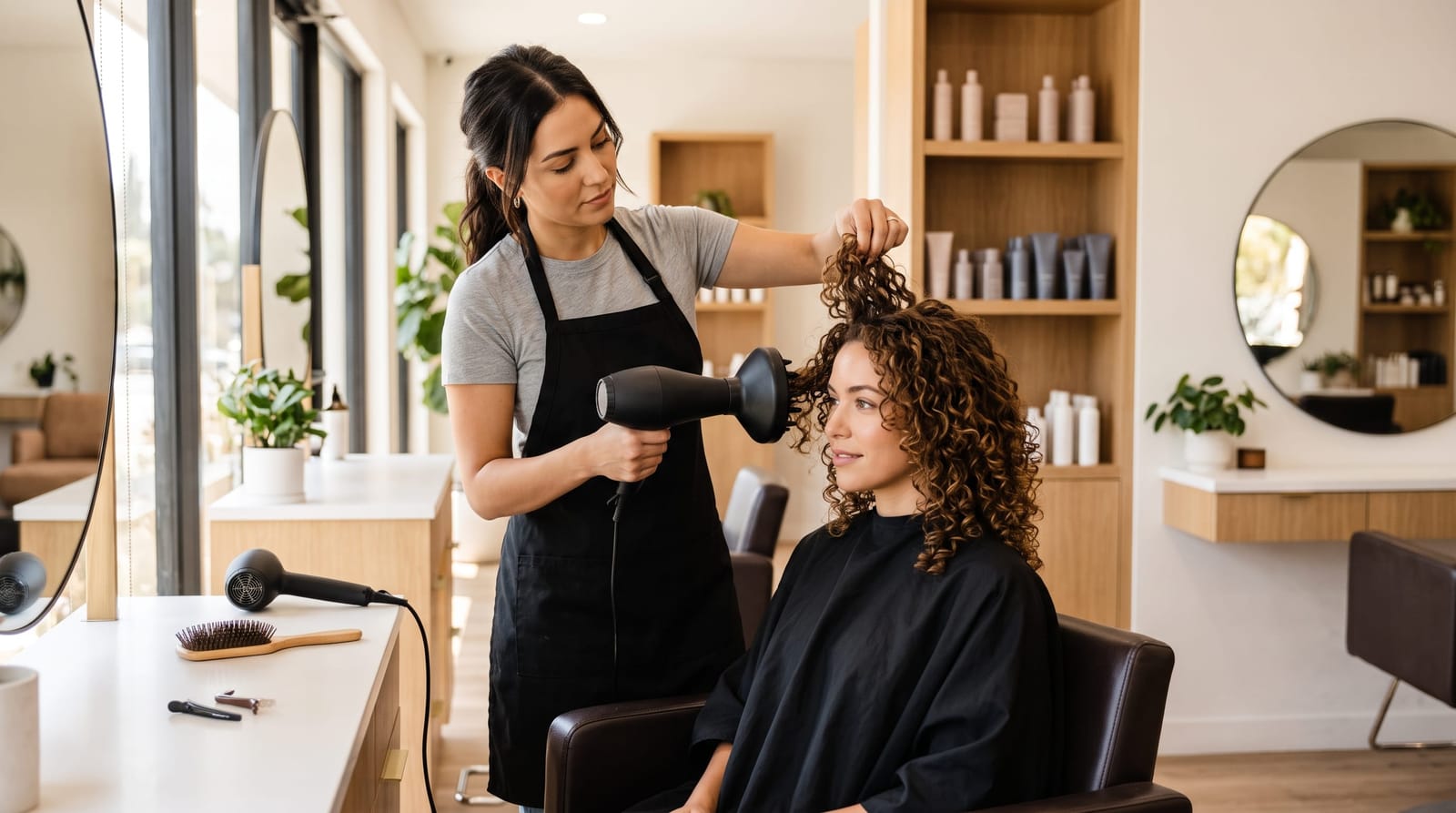
- Diffuser attachment for your blow dryer: distributes heat evenly and lifts curls at the roots without disrupting their shape
- Wide-tooth comb or fingers only for detangling: brushes on dry curly hair typically cause significant breakage and frizz
Nighttime Curl Preservation
How you sleep matters more than most people realize. Cotton pillowcases create friction that flattens curls and causes frizz overnight. Switching to a satin or silk pillowcase, or wearing a satin bonnet, can preserve your style for an extra day or two. Pairing this with a light refresher spray in the morning (water mixed with a small amount of leave-in conditioner) can revive curls beautifully. For more in-depth tips on protecting your style overnight, our guide on sleeping with curly hair covers the full routine.
If you're considering a temporary texture change, it's also worth understanding how different straightening methods affect your curl's long-term health: our breakdown of silk press vs. relaxer covers the key differences between a heat-based temporary straighten and a permanent chemical process.
Related Topics to Explore
This guide is one piece of a larger picture when it comes to caring for curly and textured hair. Here are a few related topics worth exploring as you build your knowledge:
- How to detangle curly hair properly without causing breakage
- The curly girl method: what it is and whether it's right for your hair type
- How to refresh second-day and third-day curls
- Product layering order for wavy, curly, and coily hair
Final Thoughts: Building a Routine That Works for You
The best products for curly hair are the ones that address your specific curl pattern, moisture needs, and lifestyle, not the ones with the most buzz online. Start simple: a sulfate-free cleanser, a hydrating conditioner, a leave-in, and one styling product suited to your curl type. Add from there as you learn what your hair responds to. Consistency matters more than complexity.
If you're not sure where to start, or if your curls have been struggling with frizz, dryness, or color damage, a consultation with a curly hair specialist makes all the difference. At IlonaR Style, we work with curly, wavy, and textured hair every day and love helping clients build a routine that actually fits their hair and their life. Book a consultation with us at the salon in Marina Del Rey and let's build the right plan for your curls.