Keratin Treatment on Curly Hair: Benefits, Process, and What to Expect
When most people hear "keratin treatment," they picture pin-straight hair. But for those of us navigating the beautiful complexity of curly, wavy, and textured hair, keratin treatment on curly hair tells a completely different story: one about frizz control, enhanced definition, and hair that finally feels manageable without losing its natural character. As part of the broader conversation around curly hair coloring and care, understanding what keratin actually does to curls is essential before booking your appointment. This guide walks you through exactly how keratin treatments work on curly and wavy hair, what the process looks like, how it interacts with color-treated strands, what aftercare looks like, and how long you can realistically expect results to last.
What Is a Keratin Treatment: And What Does It Actually Do to Curls?
Keratin is a structural protein naturally found in your hair, skin, and nails. It's the building block responsible for giving each strand its strength, elasticity, and resilience. Over time, through heat styling, chemical color services, environmental exposure, and everyday wear, your hair loses keratin, leaving the cuticle rough, porous, and prone to frizz. A keratin treatment works by infusing that lost protein back into the hair shaft, temporarily smoothing the cuticle layer and creating a protective coating around each strand.
For curly and wavy hair specifically, this is significant. Research from curl-care specialists indicates that curly hair is naturally more porous than straight hair, with the cuticle layer sitting in a more open position along the curved shape of each strand. That open cuticle is why humidity hits curly hair so hard: moisture enters easily and causes the hair to swell and frizz. Keratin fills in those gaps.
The Difference Between Smoothing and Straightening
This distinction matters enormously for curly-haired clients. A traditional keratin treatment does not permanently alter your curl pattern. Instead, it relaxes the texture along a spectrum: how much depends on your natural curl type, the formula used, and how the treatment is applied. Women with loose waves (2A: 2C) may notice their wave pattern becomes significantly smoother but still present. Those with defined curls (3A: 3B) typically experience reduced frizz and easier styling while maintaining visible curl shape. Tighter curl patterns (3C and above) often see the most dramatic frizz reduction while retaining meaningful texture.
According to curl specialists, one of the most valued outcomes of keratin treatment for curly hair is the reduction of frizz across multiple curl zones in one head of hair: something curly-haired women often struggle to address with products alone. The result isn't "straight hair." It's your hair, but smoother, shinier, and far easier to work with on a daily basis.
How Keratin Treatment Interacts With Color-Treated Curly Hair
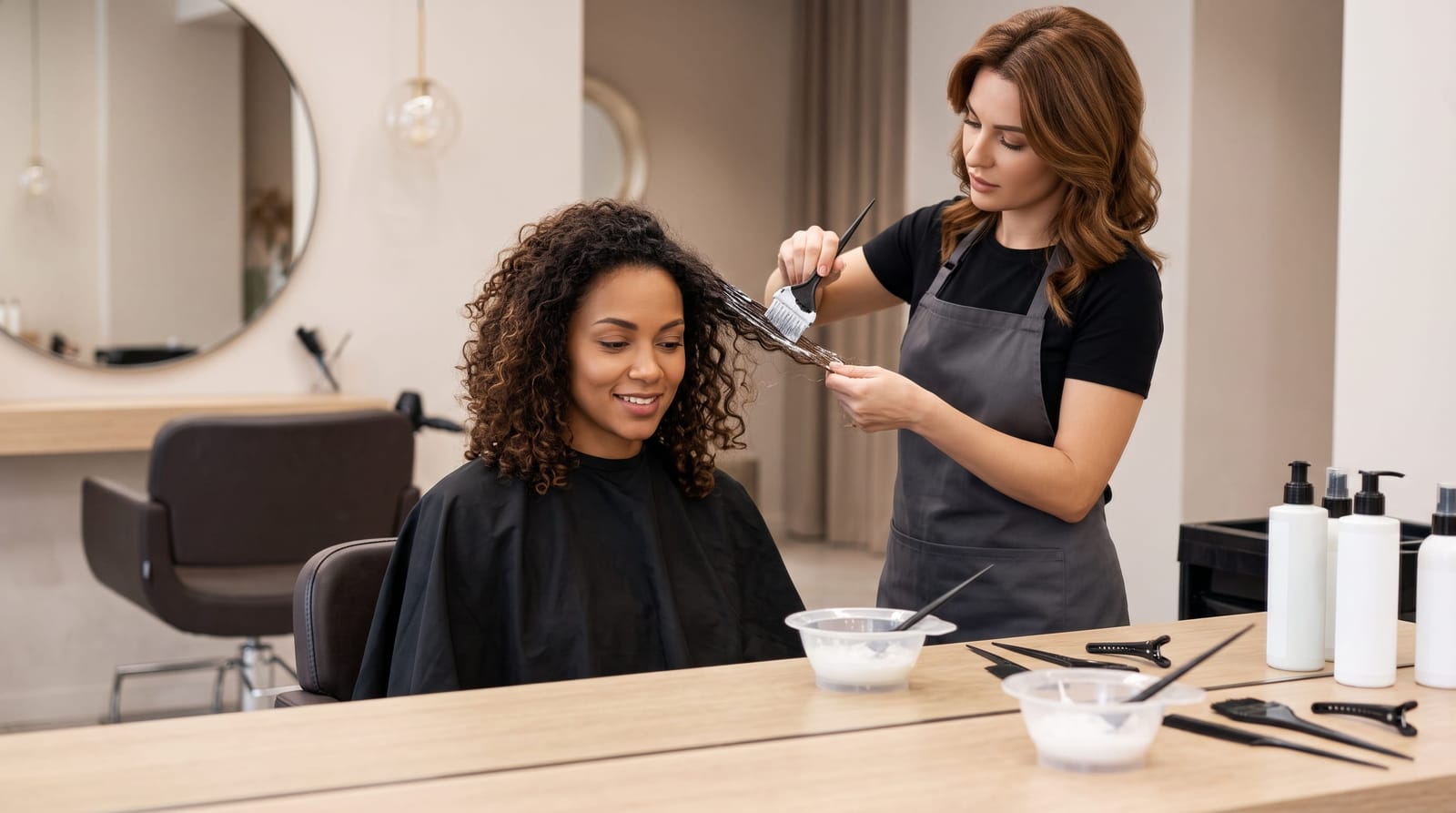
If your hair is already color-treated, whether you have balayage, highlights, or a full color, this section is especially important. Color processes, particularly lightening, raise the hair cuticle to deposit or remove pigment. This is why highlighted and bleached strands tend to feel more porous and fragile than virgin hair. For curly hair that is both colored and chemically textured, this layered complexity requires careful, knowledgeable handling.
Timing: Which Comes First?
As a general rule of thumb, it's advisable to complete your color service before your keratin treatment, not after. Here's why: the keratin coating that forms around each strand after treatment can create a barrier that makes it more difficult for color molecules to penetrate evenly. When keratin is applied over freshly colored hair, it helps seal the cuticle, which can actually extend color vibrancy and reduce fade: a meaningful benefit for color-treated curly hair that tends to lose pigment faster due to its naturally porous structure.
Studies on hair porosity and color retention suggest that highly porous hair can lose color pigment up to 30% faster than low-porosity hair, making the sealing effect of keratin genuinely valuable for color longevity. For tips on keeping color looking its best between appointments, hair color maintenance strategies specific to curly hair make a meaningful difference.
What to Discuss With Your Stylist Before Booking
Before scheduling a keratin treatment on color-treated curly hair, your stylist should assess the overall condition of your strands. Heavily bleached or compromised hair may benefit from a series of strengthening treatments before keratin is applied. The goal is always to work with your hair's current health, not against it.
The Keratin Treatment Process: Step by Step
Understanding what happens in the salon chair helps set realistic expectations and reduces pre-appointment anxiety. While specific formulas and techniques vary by brand and stylist, the general keratin treatment process for curly hair follows a consistent arc.
Step 1: Clarifying Shampoo
The process begins with a thorough clarifying shampoo designed to remove buildup from products, oils, and minerals. This step opens the cuticle and ensures the keratin formula can penetrate each strand evenly. For curly hair that regularly uses styling creams, gels, or oils, this prep step is particularly important.
Step 2: Application of the Keratin Formula
Your stylist sections the hair and applies the keratin treatment from roots to ends. The formula is worked through each section carefully, ensuring even saturation. Processing time varies: most treatments require the formula to sit on the hair for 20 to 45 minutes, depending on the product and your hair's porosity level.
Step 3: Blow-Drying and Flat Iron Sealing
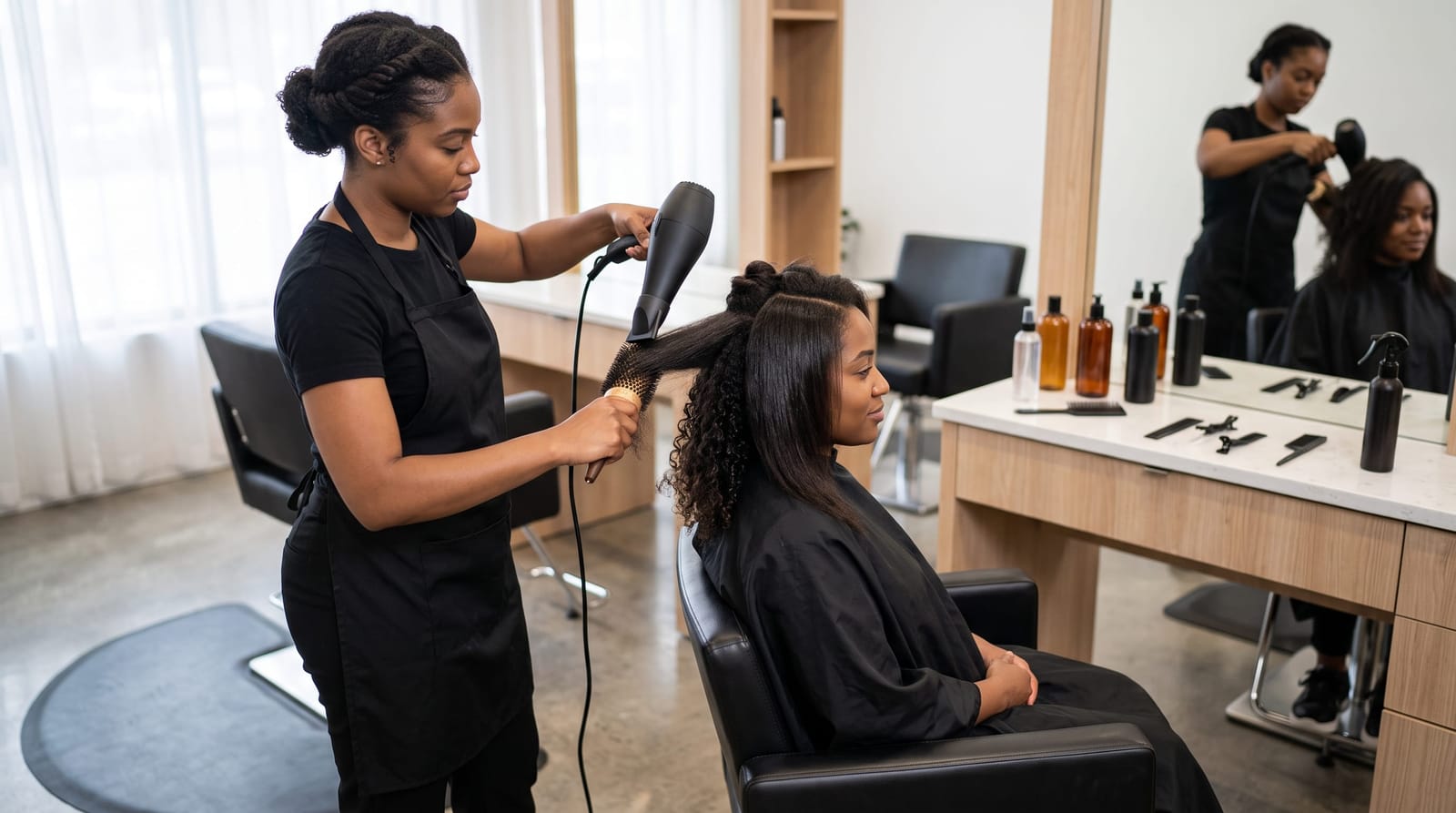
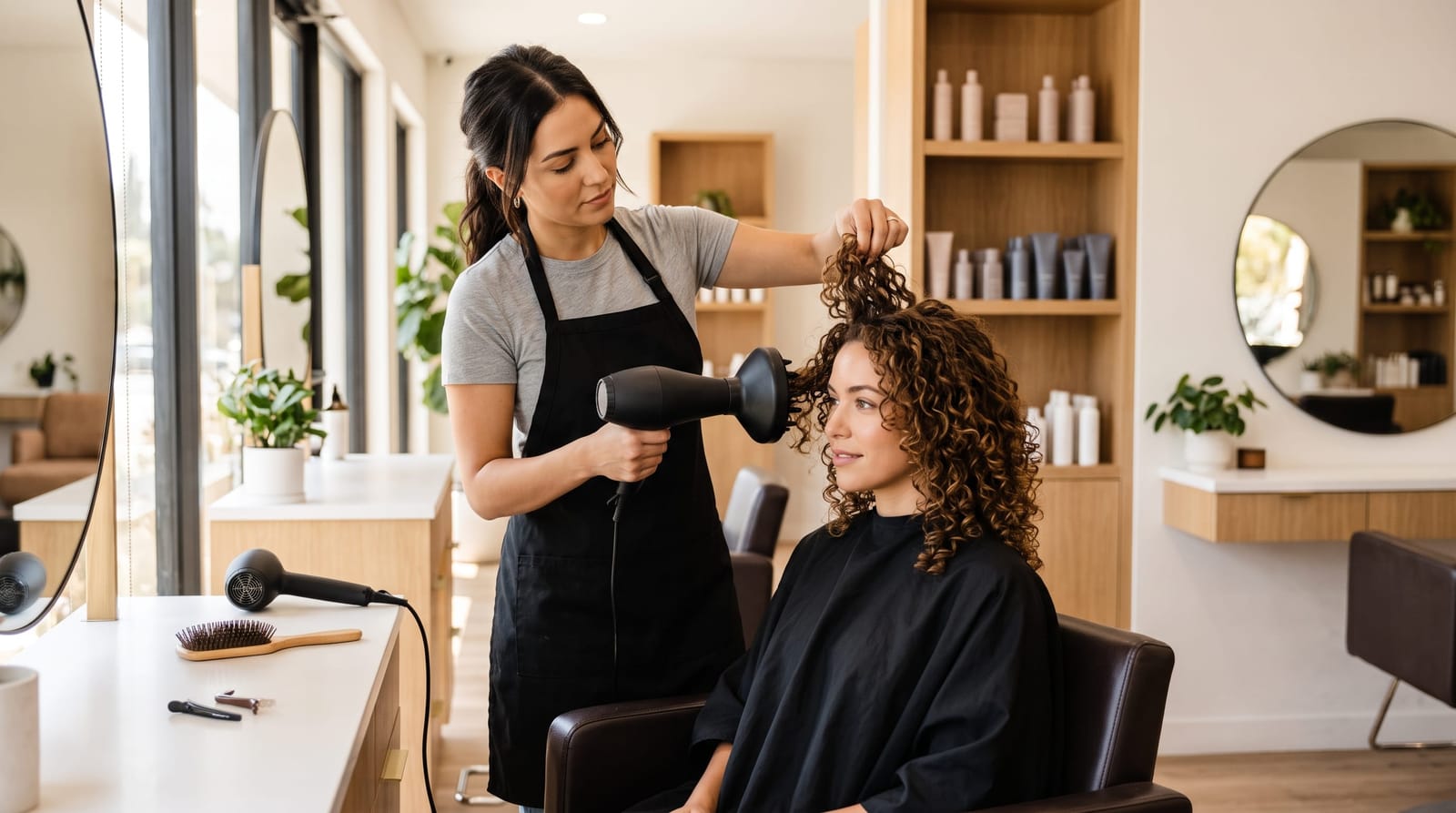
This is where curly hair clients sometimes feel nervous. The stylist blow-dries the hair smooth and then uses a flat iron at high heat to seal the keratin into the cuticle. The flat iron is what creates that sleek, polished result immediately after the treatment. It's worth noting that your hair will look noticeably straighter directly following the appointment: this softens over time as the treatment settles and your natural texture gradually returns.
Step 4: The Waiting Period
Most keratin treatments require a 48 to 72 hour waiting period before the hair is washed or exposed to moisture. During this window, you'll want to avoid pulling the hair back, tucking it behind your ears, or wearing it in any style that creates creases or bends. This is a commitment, but it's what allows the treatment to fully bond and deliver lasting results.
Keratin Treatment Aftercare for Curly Hair
The longevity of your keratin treatment depends significantly on how you care for your hair in the weeks and months that follow. Curly hair, which already requires thoughtful moisture management, benefits from a slightly adjusted routine post-treatment.
Switch to Sulfate-Free Shampoo
Sulfates are the cleansing agents in most conventional shampoos: they're effective, but they strip the hair of moisture and break down keratin coatings faster. Switching to a sulfate-free shampoo is non-negotiable after a keratin treatment if you want your results to last. Many curly hair enthusiasts are already using sulfate-free formulas, which makes this transition seamless.
Minimize Chlorine and Salt Water Exposure
Swimming in pools or ocean water accelerates the breakdown of the keratin coating. If you plan to swim, wearing a swim cap or applying a protective oil to your hair before getting in the water can help minimize damage. If you're active and regularly participate in water sports, discuss this with your stylist before your appointment: it's also worth reading about exercise after Brazilian blowout guidelines, as many of the same principles apply to keratin aftercare.
Continue Caring for Your Curls
Keratin doesn't replace your curl care routine: it enhances it. Continue using nourishing conditioners, curl-friendly styling products, and protective sleep routines (like sleeping on a silk pillowcase or using a satin bonnet). Your curls will gradually re-emerge as the treatment softens, and maintaining moisture balance during this time supports the healthiest possible result.
How Long Does Keratin Treatment Last on Curly Hair?
This is one of the most frequently asked questions, and the honest answer is that it varies. Most keratin treatments on curly hair last between 3 and 6 months, with the average falling closer to 3 to 4 months for those with tighter curl patterns and up to 5 to 6 months for those with looser waves.
Several factors influence how quickly results fade:
- Wash frequency: The more often you shampoo, the faster the keratin coating breaks down. Curly hair clients who wash once or twice per week typically extend their results compared to those who wash daily.
- Product ingredients: Sulfates, sodium chloride (found in some hair products), and harsh alcohols all accelerate keratin breakdown. Reading ingredient labels matters.
- Hair porosity: Higher-porosity hair tends to absorb the treatment quickly but may also release it faster. Your stylist can recommend formulas and application techniques suited to your porosity level.
- Heat styling habits: Clients who regularly use heat tools post-treatment may notice results lasting on the shorter end of the spectrum.
The gradual return of your curl pattern is natural and expected. Many clients appreciate this fade: the hair moves through phases of very smooth, then softly wavy, then back to fully curly, which can feel like getting to enjoy multiple versions of your hair over a few months.
Is Keratin Treatment Right for Your Curly Hair?
Keratin treatment on curly hair isn't a one-size-fits-all solution, and part of the value of working with a specialist is having an honest conversation about whether it's the right choice for your specific hair. Clients who benefit most tend to share a few things in common: they want to reduce daily styling time, they struggle with humidity-driven frizz, and they're looking for more manageable curls rather than straight hair.
If your primary goal is preserving your curl pattern while gaining manageability and shine, keratin treatment is likely a strong option. If you're hoping to eliminate curl entirely or achieve permanent straightening, that's a different category of service (like a chemical relaxer), and it comes with a different set of considerations and commitments.
It's also worth considering the full picture of your curl care. Understanding whether your curls benefit from a specialist cut is part of the equation: the difference between a deva cut vs regular cut matters both before and after a keratin treatment, since the way your curls are shaped will influence how they look as the treatment gradually releases. And if you're wondering how to keep your color looking its best through and after a keratin service, exploring highlights on curly hair and the specific care they require is a helpful next step.
Related Topics Worth Exploring
If this guide has sparked more questions about your curly hair care routine, these related topics go deeper into the details:
- How the shape and technique of your haircut affects how curls respond to keratin, and why a specialist cut makes a difference
- What to expect from your color appointment before a keratin treatment, and how to sequence services for the healthiest outcome
- Post-treatment lifestyle adjustments, including how exercise and sweat affect your keratin results in the weeks following your appointment
Final Thoughts: Keratin Treatment and the Art of Working With Your Curls
Keratin treatment for curly hair is one of those services that, when done well, genuinely changes the daily experience of having curly hair, not by taking away what makes your hair beautiful, but by removing the obstacles that make it exhausting. Less frizz, more shine, easier mornings, and a curl pattern that still feels like yours. That's the goal.
At IlonaR Style, the approach to keratin treatment is rooted in understanding curly hair first: its structure, its porosity, its relationship with color, and its unique needs at every stage of care. If you're curious whether keratin treatment is the right next step for your curls, we'd love to have that conversation with you. Reach out to schedule a consultation and let's talk about what your hair actually needs.