Deva Cut vs Regular Cut: Why Curly Hair Needs a Specialist
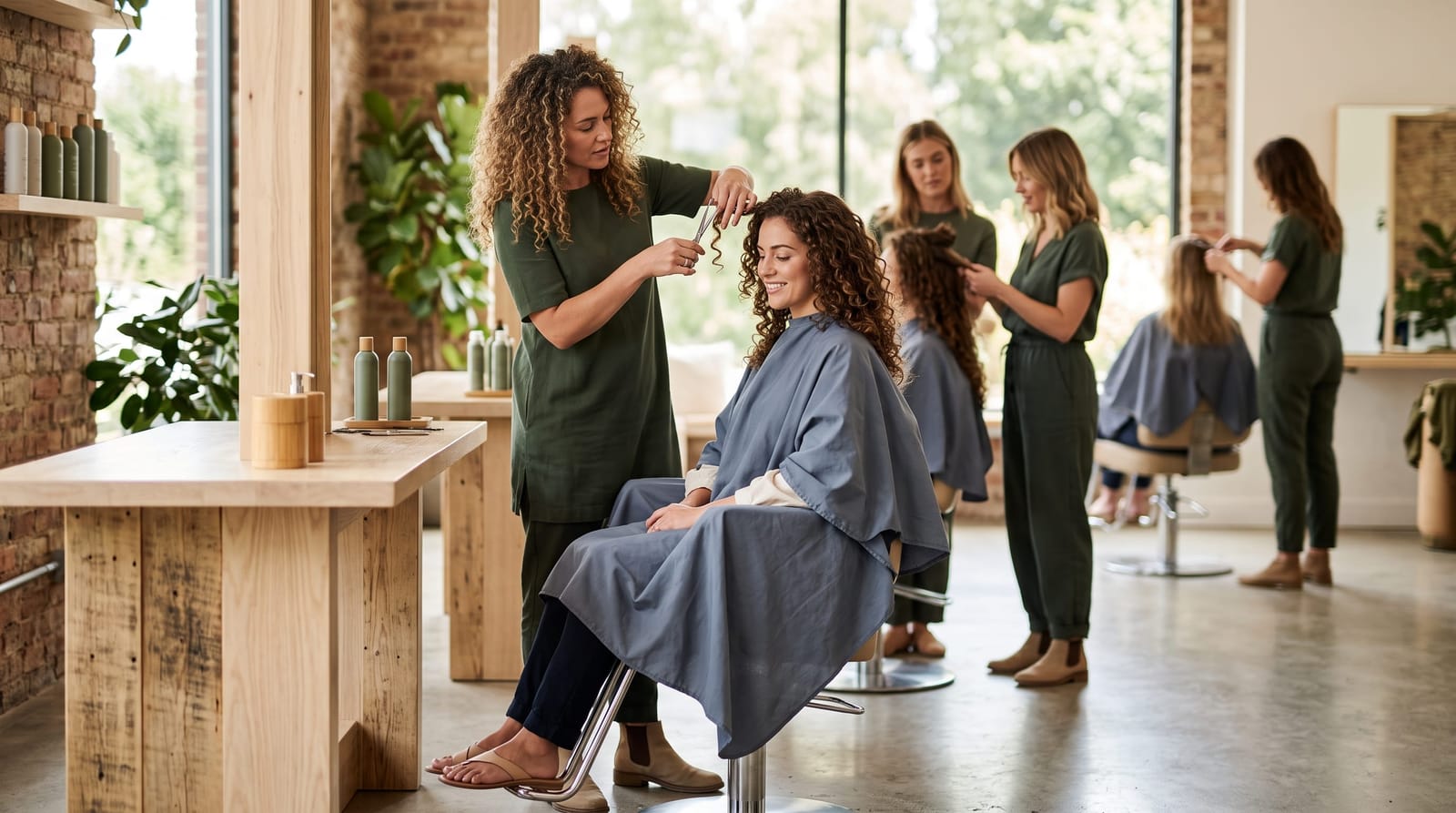
If you have curly, wavy, or textured hair, you've probably experienced the frustration of leaving a salon with a haircut that looked nothing like what you expected, or worse, one that took months to grow out. The difference between a great curly haircut and a disappointing one often comes down to one fundamental question: was it cut dry or wet? Understanding the deva cut vs regular cut distinction is one of the most important things you can do for your curls. This guide breaks down exactly how these two approaches differ and why that difference matters so much for your hair.
What Is a Deva Cut?
A Deva Cut is a specialized haircutting technique performed on dry hair: meaning your curls are cut in their natural, fully formed state, exactly as they look on any given day. The technique was developed by Lorraine Massey and the team at DevaChan Salon in New York City and has since become one of the most recognized methods in the curly hair community.
What makes a Deva Cut distinctive is that your stylist works curl by curl, section by section, shaping the hair while seeing precisely how each curl coils, where it falls, and how much it springs up. This approach allows the stylist to see the finished result as they cut, rather than guessing how a wet section of hair will behave once it dries.
Deva Cuts are performed by stylists who have been trained through DevaChan's curriculum, so when you see the term used by a salon, it signals a specific level of curly hair education. That training focuses on curl pattern recognition, shrinkage management, and dry-cutting precision. At IlonaR Style, working with curly and wavy textures is a core specialty, and understanding these techniques is central to how we approach every curly client's haircut.
What Is a Regular Haircut?
A traditional or "regular" haircut is performed on wet hair. The stylist shampoos and conditions your hair, combs it out while damp, and cuts it in a straight, elongated state. This method works beautifully for straight and even slightly wavy hair types: wet hair is easier to section evenly, and it cuts cleanly and predictably.
The problem arises when this wet-cutting method is applied to curly hair. Studies on curl behavior have found that curly hair can shrink anywhere from 30% to 70% of its length when it dries, depending on the curl type. A stylist cutting wet curly hair is essentially cutting a completely different version of your hair: one that doesn't reflect how your curls actually behave, where they cluster together, or how much volume they create in certain areas.
When curly hair that was cut wet finally dries, sections that were trimmed to the same length can spring up at dramatically different rates, creating unintended layers, uneven hemlines, or a shape that looks nothing like what was discussed during the consultation. For clients with Type 2 wavy to Type 4 coily hair, this disconnect between the wet cut and the dry result is one of the most common sources of salon disappointment.
Deva Cut vs Regular Cut: The Core Differences Side by Side
To understand why the deva cut vs regular cut conversation matters so much for curly hair, it helps to look at the two methods directly alongside each other:
- Cutting state: A Deva Cut is performed on dry, styled hair. A regular cut is performed on wet, combed-out hair.
- Shrinkage factor: Deva Cuts account for curl shrinkage naturally, since the curl is already in its shrunken state. Regular cuts ignore shrinkage, which can lead to the hair being significantly shorter than expected after drying: sometimes by several inches.
- Shape and proportion: A Deva Cut stylist sculpts the shape based on how your curls actually fall and cluster. A regular cut creates a shape based on how the hair hangs when wet: two very different silhouettes.
- Curl definition: Because the Deva Cut works with individual curl formation, it tends to enhance curl definition and reduce bulk in the right places. A regular cut can disrupt curl groupings and leave hair looking frizzy or shapeless once dry.
- Specialist training: Deva Cuts require specific curly hair education. Regular cuts are the standard technique taught in general cosmetology training, which typically dedicates very limited time, often fewer than 10 hours out of a full program, to textured hair cutting techniques.
- Appointment experience: A Deva Cut appointment usually begins with a dry consultation so the stylist can assess your natural curl pattern first, before any water touches your hair. A regular haircut typically begins immediately with a shampoo.
One additional note: some clients ask about the Rëzo Cut, another dry-cutting technique for curls. While similar in philosophy to the Deva Cut, Rëzo Cuts involve intricate geometric sectioning that can take up to three hours to complete and tend to carry a higher price point. The Deva Cut remains one of the most widely practiced and accessible curly-specific techniques.
Why the Wrong Cut Can Set Your Curls Back
Getting a regular haircut on curly hair isn't just a missed opportunity: it can actively work against your curl health and definition over time. Here's why:
When curly hair is cut while wet and straight, the ends are often blunt-cut across clusters of curls that naturally travel together. Once dry, those blunt ends weigh down individual curls, preventing them from coiling fully and creating a frizzy, undefined perimeter. Clients often describe this as their curls "not bouncing" or looking flat after a haircut, even when the length is the same.
Additionally, stylists unfamiliar with curl patterns may over-layer curly hair in an attempt to reduce bulk: a technique that works well for straight hair but can create a triangle shape or pyramid silhouette on curly hair, with tight curls on top and expanded, unshapely volume at the bottom.
If you're also coloring your curly hair, the haircut becomes even more important. Color-treated curls need to be cut in a way that removes any compromised or overly porous ends without disrupting the overall shape, which is why combining curly hair coloring expertise with specialist cutting technique matters so much. Keeping your curls healthy after color treatment is much easier when your cut is working with your curl pattern rather than against it.
How to Know If You Need a Curly Hair Specialist
Ask yourself a few honest questions. After your last haircut, did your curls look better or worse? Did your stylist wet your hair before they cut it, without asking about your curl pattern or shrinkage? Did you leave with a shape that looked different once your hair dried at home?
If any of these resonate, it's likely that a curly hair specialist, someone trained in dry-cutting techniques like the Deva Cut, would give you a significantly different experience and result. Many curly clients report that their first Deva Cut felt like meeting their hair for the first time. That's not an exaggeration; it's the result of finally having a haircut designed around how your curls actually live.
If you're curious about how often to schedule this type of cut to maintain your curl shape, that depends on your curl type, length goals, and how quickly your hair grows: something worth discussing in depth with your stylist at your first curly-specialist consultation.
Frequently Asked Questions
Is a Deva Cut only for very curly hair?
No. Deva Cut techniques benefit a wide range of curl and wave patterns, from loose Type 2 waves to tighter Type 4 coils. Any hair type that behaves differently when wet versus dry, which is most textured hair, can benefit from a dry-cutting approach that accounts for how the hair actually falls and coils when styled.
Can I get a Deva Cut if my hair is color-treated?
Yes, and in many cases it's especially helpful. Color-treated curly hair can have varying porosity levels and texture changes along the strand, which makes dry cutting even more valuable: the stylist can see exactly how those differences are affecting your curl formation and shape the haircut accordingly.
How much shorter will my hair look after a Deva Cut compared to a regular cut?
Because a Deva Cut is done on dry hair, what you see during the appointment is very close to what you take home. With a regular wet cut, curly hair can appear to lose anywhere from 1 inch to 4 or more inches of apparent length once it dries and curls contract: depending on your curl type and the degree of shrinkage. This is one of the most common surprises for curly clients who have only ever had wet haircuts.
How do I find a stylist who truly specializes in curly hair?
Look for stylists who specifically mention curly hair cutting techniques like the Deva Cut as part of their training and services, not just as an add-on. Before booking, ask whether they cut curly hair dry, how they approach the consultation, and whether they have experience with your specific curl type. A stylist who asks detailed questions about your curl pattern before your appointment is a good sign.
The Right Cut Changes Everything for Curly Hair
When it comes to the deva cut vs regular cut debate, the answer for curly hair is clear: technique matters enormously. A dry cut designed around your natural curl pattern will consistently outperform a traditional wet cut when it comes to shape, definition, and how well your curls hold up over time. At IlonaR Style in Marina Del Rey, curly hair isn't an afterthought: it's a specialty. If your curls have never had a haircut that truly worked with them, that first dry-cut consultation might be the most important appointment you make for your hair this year.