How to Protect Curly Hair from Humidity: Stylist-Approved Techniques
If you've ever stepped outside in Marina Del Rey or Santa Monica with perfectly defined curls, only to arrive somewhere looking like a completely different person, you already know the struggle. Humidity is one of the biggest challenges in curly hair coloring and care, and for wavy, curly, and textured hair, the effects are more dramatic than most people realize. The good news is that curly hair humidity protection isn't about fighting your hair's natural tendencies. It's about understanding why frizz happens and building a routine that works with your curl pattern, not against it. This guide walks you through the science, the product choices, the styling techniques, and the salon services that make a genuine difference, especially for life in a coastal California climate.
Why Humidity Affects Curly Hair More Than Straight Hair
To protect your curls from humidity, it helps to understand exactly what's happening on a structural level. Curly hair has a naturally elliptical shape and a cuticle layer that sits slightly more open than straight hair. That open cuticle is what gives curls their beautiful texture, but it also makes them highly porous, meaning they absorb moisture from the air quickly and unevenly.
When humidity levels rise, water molecules from the air penetrate the hair shaft at irregular intervals. This causes the hair fiber to swell in some areas more than others, disrupting your curl pattern and creating the lifted, frizzy texture that feels impossible to tame. Research from hair scientists suggests that even a relative humidity level of around 60%, which is common in coastal neighborhoods like Marina Del Rey on summer mornings, is enough to cause significant frizz in textured hair types.
For color-treated curls, the challenge is slightly compounded. Chemical color services, including highlights and balayage, can temporarily raise the cuticle as part of the lightening process. Without proper aftercare, color-treated curls may absorb environmental moisture more readily than natural, unprocessed hair.
High Porosity vs. Low Porosity Curls
Porosity plays a major role in how your hair responds to humidity. High-porosity curls absorb moisture quickly but lose it just as fast, making them highly reactive to atmospheric changes. Low-porosity curls resist moisture absorption but can still experience surface frizz when the cuticle is disrupted. Understanding your hair's porosity helps determine which products and techniques will work best for your specific texture.
Tip 1: Build a Moisture-Balancing Wash Day Routine
The foundation of effective curly hair humidity protection starts in the shower, not at your styling vanity. A well-hydrated curl is far less likely to seek moisture from the surrounding air, which means that deep conditioning and moisture-balancing products are your first line of defense.
What to Include in Your Wash Day Routine
- Sulfate-free shampoo: Sulfates can strip natural oils from curls, leaving them dry and more reactive to humidity. A gentle, sulfate-free formula cleanses without over-drying.
- Deep conditioning treatment: Aim to use a deep conditioner for 10-20 minutes at least once per week. Look for ingredients like shea butter, glycerin, and hydrolyzed proteins.
- Leave-in conditioner: Applied to soaking-wet hair immediately after the shower, a leave-in creates an initial moisture barrier that helps products layer more effectively.
- Curl cream or styler: A cream-based styler adds definition and begins sealing the cuticle before you apply any hold product.
The order in which you apply products matters. Think of it as layering: lightest to heaviest, with each product sealing in what came before it. Skipping steps, especially the leave-in, is one of the most common reasons curls fall flat or frizz up before midday.
Tip 2: Choose the Right Anti-Humidity Products
Not all curl products are formulated with humidity protection in mind. When you're shopping specifically for curly hair humidity protection, you want to look for products that do two things: lock moisture into the hair shaft, and create a barrier that resists outside moisture from getting in.
Key Ingredients to Look For
- Film-forming polymers (such as polyquaternium compounds): These coat the hair strand and create a flexible, lightweight seal that resists humidity without stiffness.
- Silicones (dimethicone, cyclomethicone): Water-resistant silicones form a smooth barrier on the cuticle that repels moisture from the air. They work particularly well as a finishing layer.
- Natural oils (argan, jojoba, camellia): A small amount of hair oil smoothed over finished curls helps seal the cuticle and adds a polished, frizz-resistant finish.
- Humectants in balanced amounts (glycerin, aloe): Humectants attract and hold moisture, helpful when used correctly, but potentially problematic in very high-humidity environments if used too heavily as a top layer.
Product Formats That Perform Well in Coastal Humidity
- Anti-humidity sprays: Lightweight and ideal as a finishing step, these can be misted over styled curls to add a final layer of protection without weight.
- Strong-hold gels: A gel with a firm hold "casts" the curl and prevents outside moisture from disrupting the pattern as it dries. Once dry, you can scrunch out the cast for soft, defined curls.
- Curl-sealing serums: Heavier than sprays but lighter than creams, serums work well as a top layer over your styling products.
For personalized product recommendations tailored to your specific curl type, exploring a best products for curly hair guide written from a stylist's perspective can help you navigate the overwhelming number of options on the market.
Tip 3: Master Your Drying Technique
How you dry your curls is just as important as what you put in them. One of the most common mistakes with curly hair humidity protection is leaving curls to air dry without full product saturation, or, on the opposite end, using too much heat without the right protection.
Diffusing vs. Air Drying
In a humid coastal environment, air drying can work against you. As curls dry slowly, they remain in an open, vulnerable state for longer, giving atmospheric moisture more time to disrupt the curl pattern before it sets. Diffusing, using a diffuser attachment on a blow dryer set to medium heat and low airflow, speeds up the drying process and helps set the curl pattern more efficiently.
- Always diffuse on low airflow to avoid disturbing the curl pattern
- Work in sections, lifting curls into the diffuser rather than rubbing or scrunching aggressively
- Finish with a brief cool-air blast to help close the cuticle and lock in your style
- Make sure your hair is at least 90-95% dry before stepping outside, even slightly damp curls are highly susceptible to humidity frizz
The Microfiber Towel Difference
Standard terry cloth towels create friction that roughens the cuticle and triggers frizz before you've even started styling. Switching to a microfiber towel or a soft cotton t-shirt for blotting (not rubbing) your curls can make a noticeable difference in how smooth and frizz-free your style looks from the start.
Tip 4: Consider Salon Treatments That Provide Long-Term Protection
Product routines and styling techniques are essential, but certain professional salon services offer a more lasting layer of humidity protection: particularly for clients who want low-maintenance results between appointments.
Keratin Treatments for Humidity Control
A keratin treatment curly hair application is one of the most effective professional solutions for managing frizz and humidity in curly and wavy hair. Keratin treatments work by infusing a protein complex into the hair shaft and sealing the cuticle with heat. The result is smoother, more manageable hair that resists humidity more effectively, often for 3 to 5 months depending on the formula used and how frequently hair is washed.
Modern keratin treatments can be customized to preserve curl pattern (rather than fully straightening) while significantly reducing frizz and shortening drying time. For clients near the coast, this is often a seasonal investment that pays off significantly through the more humid months.
How Color Services Can Affect Humidity Resistance
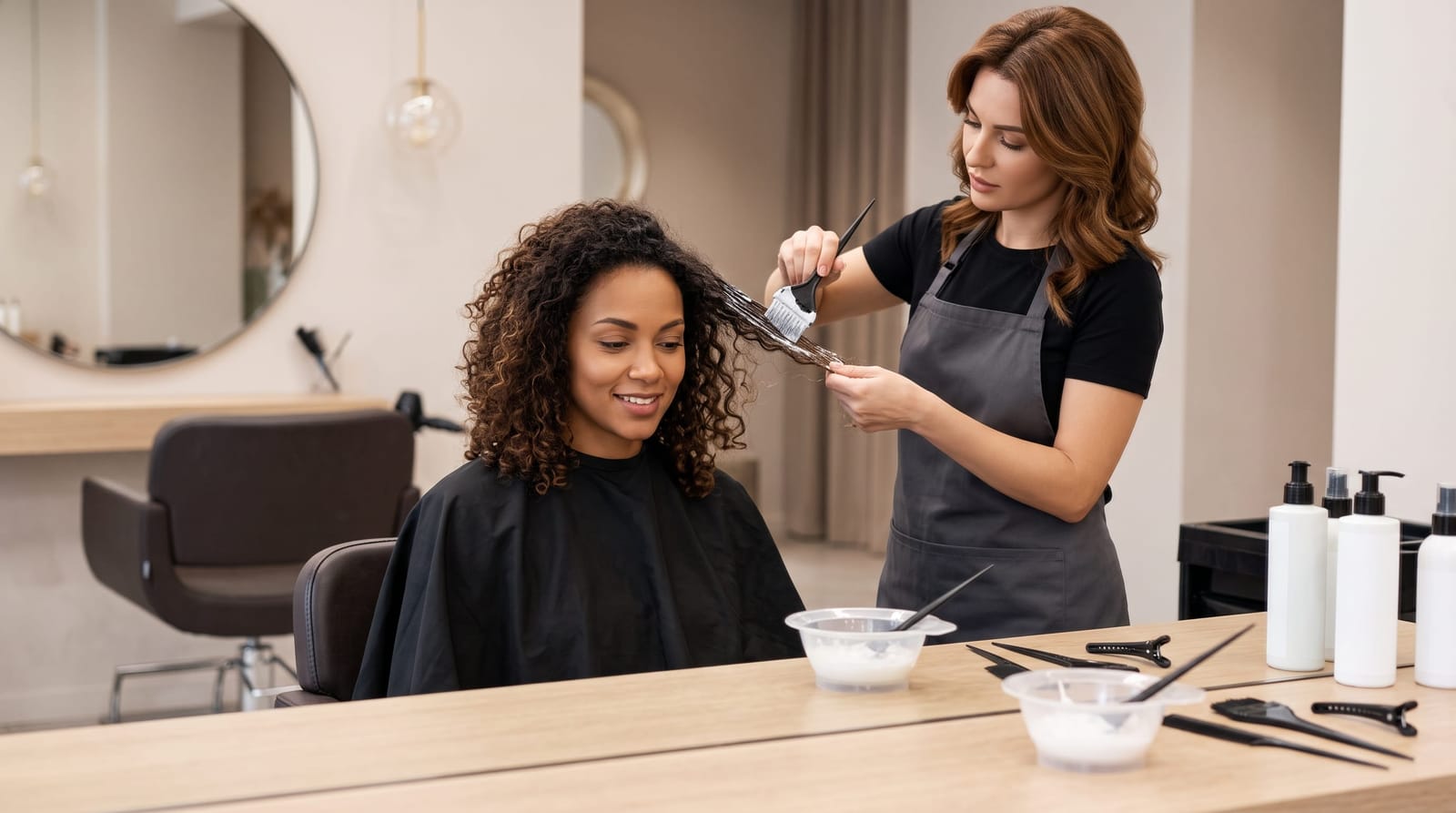
The technique and aftercare associated with your color service can influence how your curls respond to humidity. Balayage, for example, is a gentler approach to lightening that doesn't require heavy foil application at the root, which tends to result in less overall cuticle disruption than traditional full-highlight foiling. Pairing a balayage service with a professional gloss or bond-building treatment helps close the cuticle and strengthen the hair after color: two things that directly contribute to better humidity resistance.
Tip 5: Adjust Your Routine by Season and Location
Living near the coast in Marina Del Rey or Santa Monica means your hair routine should be flexible. Humidity levels shift throughout the year: mornings near the water tend to be naturally more humid, particularly in late spring and early summer during what locals call "June Gloom." The marine layer can push humidity levels noticeably higher than inland neighborhoods, even when the sky feels overcast rather than overtly tropical.
Seasonal Adjustments Worth Making
- Summer and early fall: Increase hold in your styling products; layer a gel over your curl cream for stronger definition that holds up throughout the day.
- Spring (June Gloom months): Add an anti-humidity finishing spray to your routine even on cloudy days: the marine layer can be deceptively humid without feeling warm or sunny.
- Winter: Coastal winters in Los Angeles are drier overall; you may be able to rely more on moisturizing products and lighter hold without worrying as much about atmospheric frizz.
- Windy beach days: Wind combined with humidity is particularly challenging for curls. A light oil applied over your finished style helps smooth flyaways without adding visible weight or greasiness.
It's also worth noting that curly hair that has been recently straightened or pressed responds differently to humidity than naturally styled curls. If you're weighing permanent straightening options, understanding the difference between a silk press vs relaxer in terms of longevity and humidity response can help you make a more informed decision for your lifestyle.
Going Deeper: Related Topics in Curly Hair Care
Humidity protection doesn't exist in isolation: it connects to nearly every other aspect of curly hair care, from the products you choose to the color services you invest in. Here are a few related areas worth exploring as you build a complete curly hair routine:
- Curl porosity and hydration: Understanding whether your curls are high or low porosity helps you select products that actually absorb and perform, rather than sitting on the surface.
- Post-color curl care: Color-treated curls benefit from specific conditioning protocols and bond-building treatments that restore structural integrity and improve humidity resistance.
- Protective styles in summer: For clients who want a break from daily styling during peak humidity months, certain protective styling approaches can minimize manipulation and frizz exposure.
The Bottom Line on Curly Hair Humidity Protection
Living with beautiful curls near the coast doesn't have to mean a daily battle with frizz. With the right product layering strategy, smart drying technique, and occasional professional treatments, curly hair humidity protection becomes a natural part of your routine rather than an ongoing struggle. Understanding the science of how your curls react to moisture gives you the knowledge to make better choices, whether you're shopping for products, planning your wash day, or considering a salon service that offers longer-lasting results.
At IlonaR Style, we specialize in curly hair coloring and care for clients in Marina Del Rey and Santa Monica, and that includes helping you maintain beautiful, frizz-resistant results between appointments. If you'd like personalized guidance on building a humidity-proof curl routine or exploring treatments suited to your texture, we'd love to welcome you into the salon.