What Drives the Cost of Fixing a DIY Hair Color Mistake in Los Angeles
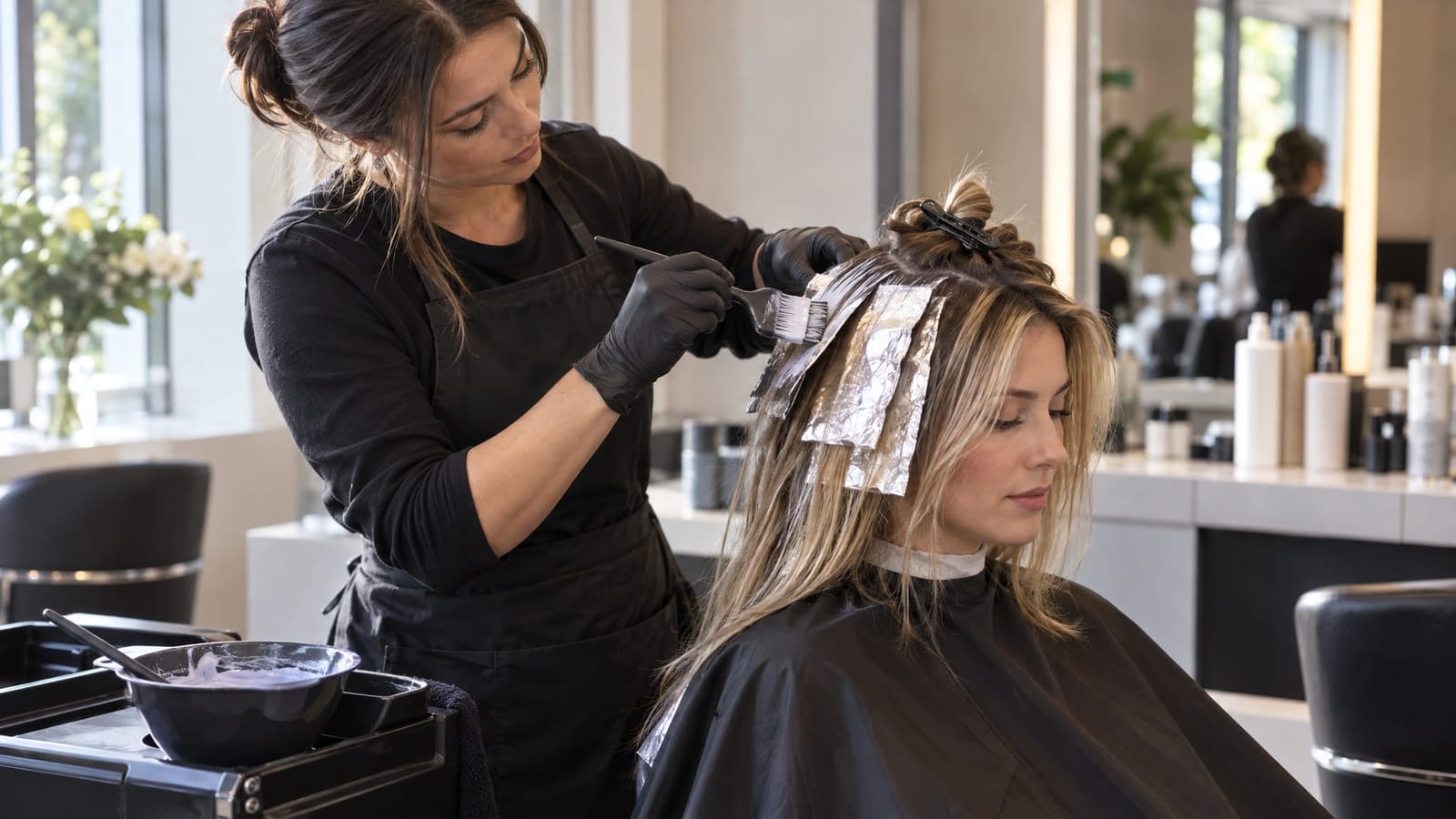
Fixing a DIY color mistake can cost more than a routine color appointment because the work is different. Instead of applying one shade evenly, a colorist may need to address dark ends, warm roots, and uneven patches separately. The biggest cost factors are your color history, your desired result, the amount of corrective work, and whether that work fits into one visit.
But not every disappointing result needs an extensive correction. An unwanted tone is different from layers of permanent dye that need lightening. Understanding that distinction helps you compare your options without assuming the most expensive approach is the right one.
The starting point: warm roots and ends that look too dark
Consider this example: your hair has older highlights, and you apply a permanent brown color at home to create a more uniform brunette. After drying, the roots look warmer than expected, while the highlighted ends look much darker. You want a soft, natural-looking brown, not necessarily a return to blonde.
That last detail matters. Restoring every highlight would be a different project from creating a balanced brunette.
Previously lightened lengths and newer growth can respond differently to the same formula. Older, more porous sections may absorb color unevenly, while the roots present a different starting shade. Adding another all-over box color may deepen the areas that are already too dark without resolving the contrast.
The correction begins by separating two questions: what looks wrong, and what needs to change to achieve a result you would enjoy wearing?
The first decision: keep the depth or bring back brightness?
For this example, there are two distinct directions. Neither is automatically the better choice.
Option one: work toward a balanced brunette
If you like the overall depth, the goal may be to adjust warmth and reduce visible differences between sections. This can involve more targeted work than trying to remove the dark color throughout the hair.
The tradeoff is accepting a deeper result than your original inspiration photo. A toner or gloss can refine tone, but it is not a substitute for removing artificial color when the hair is too dark.
Option two: restore a lighter, dimensional look
If the darker ends are the main problem, they may need selective lightening before the final shade can be created. Applying a lighter permanent color over dark artificial color does not reliably make those lengths lighter.
This direction adds processing and finishing work. Depending on the hair’s condition and color history, a staged approach may make more sense than pursuing the full change in one appointment. The tradeoff is additional visits and an interim shade.
How those choices shape the correction quote
A useful hair transformation cost estimate describes the work, not just the final color name. “Soft brunette” could mean a tone adjustment for one person and several corrective steps for another.
When comparing color-correction quotes in Los Angeles, look at these details:
- Color history: Repeated permanent color applications create a different starting point from a single uneven application. Previous bleach, highlights, and smoothing services also belong in the conversation.
- Placement of the problem: A small uneven area differs from several dark bands running through the lengths. Different sections may require separate formulas and careful application.
- Length and density: More hair generally means more sectioning, product, and application time.
- Degree of change: Refining an existing brunette is a different task from removing dark dye to create a much lighter blonde.
- Finishing services: Check whether the estimate includes toner, conditioning, a haircut, and a blowout, or lists them separately.
- Scope of the estimate: Distinguish the first corrective appointment from the full plan, including any later lightening or tone adjustments.
Also clarify whether the quote is hourly, session-based, or itemized by service. A lower initial figure is not necessarily a lower total if the estimates cover different work.
The real comparison: planned color versus repeated fixes
The cost of DIY color is not always limited to the first box. In the brunette example, a second dye, a color-removal product, and another dye application would add purchases while changing the starting point for a later correction.
Repeated processing can also leave the lengths feeling drier or more fragile. That creates a practical tradeoff: preserving length may mean accepting less brightness for now, while removing rough ends changes the haircut as well as the color.
Professional color upfront is not automatically cheaper in every situation. Its value is in planning the formula, placement, and maintenance around the hair already on your head. Once a mistake has happened, the useful comparison is between correction options from today forward, not the money already spent.
Before the assessment: make the starting point clear
For the example above, the most useful preparation is a straightforward color history. Bring the product packaging or names, approximate application dates, and details about where each product was applied. Include older salon highlights, even if they are mostly covered now.
Choose reference photos for both your preferred result and an acceptable interim shade. Explain what bothers you most: the warmth, the darkness, or the unevenness. That priority can change the plan.
At IlonaR Style in Marina del Rey, we offer private, one-on-one hair services, including color correction, hair coloring, toner or gloss, and conditioning treatments. Our focus is natural-looking makeovers, with color suited to your skin tone and lifestyle.
A helpful correction discussion connects the desired look with the amount of length you want to keep, your styling routine, and the maintenance you are comfortable taking on.
Common questions about DIY color correction costs
Can a haircut reduce the amount of correction needed?
It can, if the darkest or most uneven sections are concentrated at the ends and you already want a shorter style. Cutting those sections removes some of the hair that needs attention. It does not resolve uneven color elsewhere.
Can conditioning treatments replace corrective color?
Conditioning can improve softness and manageability, but it does not remove unwanted dye or correct uneven color. It serves a different purpose and is not a shortcut to a lighter shade.
How much time needs to be set aside?
Time depends on the steps involved, not just hair length. Ask for an estimate covering assessment, application, processing, rinsing, and finishing. A correction requiring several separate steps is harder to fit into a tight gap between commitments than a routine touch-up.
The best-value plan starts with the result you actually want
In this example, an even brunette and restored highlights are two different projects. Defining that choice first makes the cost conversation more useful. A clear plan connects each service to a purpose, explains any interim shade, and balances the desired color with condition, length, and ongoing upkeep.