Professional Updo Hairstyles for Special Events: What Works for Every Occasion
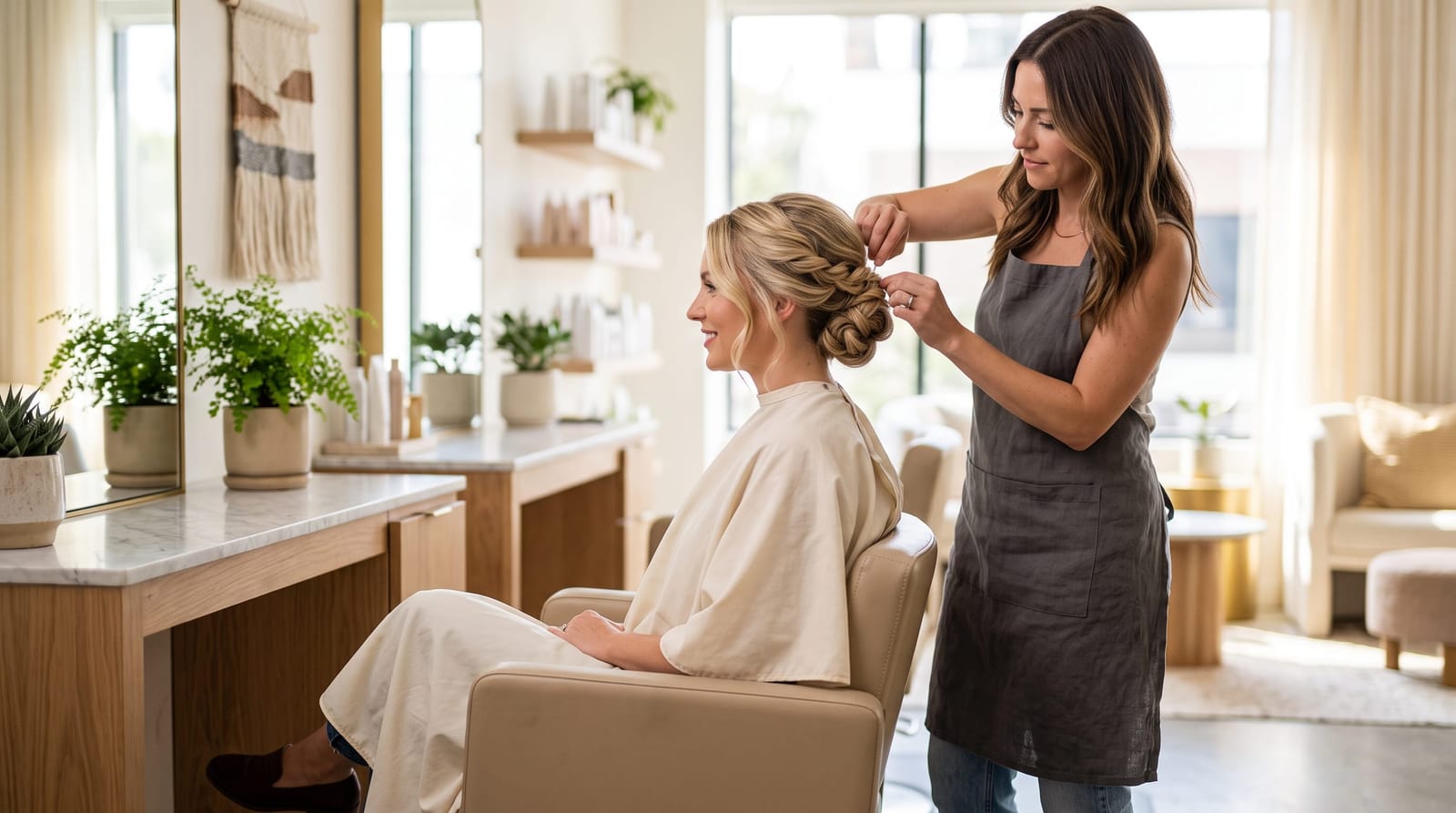
A low chignon is a versatile choice for a business conference or formal dinner. A French twist adds structure for black-tie occasions, while braided and softly pinned updos bring texture to weddings, garden parties, and creative events. The best choice depends less on the event label than on your hair, outfit, comfort, and plans for the evening.
Professional updo hairstyles can range from smooth and understated to softly textured. Choosing between them starts with a practical question: do you want a close, secure shape, or are you comfortable with a few loose pieces and a more relaxed finish?
When an Updo Makes Sense
An updo keeps most of your hair away from your face and can leave a neckline, earrings, or an open-back dress visible. It is especially useful when your plans include dinner, presentations, or dancing and you would rather not keep moving your hair out of the way.
When first impressions are on your mind, an elaborate hairstyle is not a requirement. A simple, comfortable bun can feel just as appropriate as a sculpted twist. Choose the level of detail to suit your outfit and personal style, rather than treating complexity as a measure of polish.
No updo eliminates every flyaway or guarantees an evening without adjustments. A smooth finish, loose tendrils, and a textured braid each behave differently, so the styling plan needs to account for movement, weather, and how long you will be wearing it.
Classic Updo Styles and the Occasions They Suit
The Chignon: Understated for Conferences and Formal Dinners
A chignon is a bun or tucked arrangement usually placed low at the back of the head. Its compact shape makes it an easy pairing with tailored clothing, evening dresses, and statement earrings. A center part creates a different effect from a side part, while a softly textured finish offers an alternative to a sleek surface.
Placement matters as much as finish. With a high collar or scarf, position the bun so it does not rub against the fabric. For a daytime conference followed by dinner, a restrained chignon can suit both settings without needing additional decoration.
The French Twist: A Sculpted Option for Black Tie
A French twist rolls the hair upward into a vertical shape at the back of the head. It pairs naturally with structured eveningwear and works well when you want a more formal silhouette without a large bun.
The result depends on how much length and hair volume need to be tucked into the roll. Very long or dense hair may call for an adapted shape rather than a narrow, traditional twist. A small decorative comb or pin can add detail, but the style does not need an accessory to feel finished.
Braided Updos: Texture for Weddings and Creative Events
A braided crown, a braid wrapped around a low bun, or a woven detail through the back can add interest without making the whole style look intricate. These options suit arts events, weddings, and occasions where you want visible texture.
The main decision is how much of the braid you want to see. A braid placed entirely at the back may disappear in front-facing photographs. A side detail is more visible from the front, while a braided bun keeps the texture concentrated at the nape. Short layers may need extra pinning or a smaller braided section.
Loose Romantic Updos: Softness for Garden Events
A softly pinned bun, loosely arranged curls, or a Gibson tuck, where the ends roll inward into a low tucked shape, creates a less structured finish. These styles complement wedding guest outfits, garden-party dresses, and relaxed formalwear.
The useful distinction is between a loose appearance and a loose foundation. The base can be secured firmly while the surface remains soft. For an outdoor event, fewer face-framing pieces mean less hair moving across your face in the breeze. If you enjoy tendrils, keep only the pieces you are comfortable adjusting later.
Choose a Shape That Works in Photos and in Person
No single updo photographs best in every setting. Instead of choosing by a lighting rule, check how the style looks from the angles that matter to you.
- From the front: Look at the part, height at the crown, and any face-framing pieces. A detailed back does not necessarily create visible detail around your face.
- From the side: Check where the bun or twist sits in relation to your profile, earrings, and collar.
- From the back: Check the overall shape, visible pins, and accessory placement.
- With the outfit: Make sure hair and decorative pieces do not catch on straps, lace, or a high neckline.
A quick phone photo from each angle can help you notice details that are difficult to judge in a mirror. Face shape can inform the proportions, but your preferred silhouette matters more than following a rigid rule about which features to emphasize or soften.
At IlonaR Style in Marina del Rey, we offer private, one-on-one hair makeovers. A hair makeover consultation can connect your inspiration photos with practical details such as your cut, curl pattern, and everyday styling preferences.
How to Prepare for an Updo Appointment
The most useful preparation is the one that matches the planned style. Second-day hair is not automatically better, and freshly washed hair can be styled with products that add grip.
- Agree on washing and drying beforehand: Preparation can differ for a smooth twist, a curled updo, and a style that preserves your natural curl pattern. Follow the preparation plan rather than assuming everyone needs day-old hair.
- Avoid adding unfamiliar products: Extra oil, heavy masks, or layers of styling product can change how your hair behaves. Keep your routine predictable and mention what is already in your hair.
- Bring useful reference photos: Include front and back views when possible. Explain whether you like the shape, texture, volume, or accessory, rather than expecting every detail to transfer to your hair.
- Bring your accessories: Combs, clips, and decorative pins need to work with the style's structure. An outfit photo also helps clarify neckline and placement.
- Wear something easy to remove: A button-front or zip-front top avoids pulling clothing over the finished hairstyle.
- Plan backward from departure: Allow for the agreed appointment length, getting dressed, travel, and any photographs before the event.
Plan for the Whole Event, Not a Fixed Number of Hours
Wear time depends on the foundation, hair texture, style, weather, and activity. A style name alone cannot tell you how long it will hold. For a long evening, prioritize a comfortable, secure base and decide how much loose movement you want around the face.
Before the final finish, turn your head, look down, and sit back briefly. Mention any pulling or pin pressure so the placement can be adjusted. If you will be dancing or spending time outdoors, those details belong in the styling plan from the start.
A few spare pins can be useful for securing a loose section later. Avoid repeatedly pulling at tendrils or reshaping the bun, since that can disturb the arrangement.
Common Questions About Choosing an Updo
Which styles work for fine or low-density hair?
Fine hair describes the thickness of individual strands; density describes how much hair you have. Both affect the finished shape. A compact French twist, low tuck, or small textured bun may suit hair that cannot comfortably fill a large bun. Light grip products and carefully placed volume can help, but a reference photo with a very full silhouette may need adapting.
Can an updo preserve natural curls and coils?
Yes. A pinned arrangement of curls, a textured bun, or a braided updo can retain the natural pattern rather than smoothing it away. Make that preference clear when discussing the look. Also decide whether you want visible curl definition throughout or a smoother base with texture concentrated in the bun.
Can shorter hair be styled into an updo?
Shorter hair can often be arranged into small pinned sections rather than gathered into one bun. The deciding factor is whether the sections can reach their anchor points, especially around the nape and face. If they cannot, a partial updo may offer the finish you want with less forced pinning.
When does professional styling make more sense than doing it yourself?
A familiar bun can be a practical choice if you can secure it comfortably and like it from every angle. Professional styling becomes more useful when the design involves intricate braiding, concealed support, unfamiliar techniques, or a finish that is difficult to create at the back of your own head. For a self-styled look, a practice run with the outfit helps reveal placement or comfort issues before the event.
Make the Final Choice Practical and Personal
Narrow your inspiration to two or three looks, then compare their placement, texture, loose pieces, and accessory needs. For example, if you love a romantic bun but expect a breezy outdoor reception, keep the soft texture and reduce the tendrils. That kind of adjustment preserves the look you enjoy while making it better suited to the occasion.