Best Shampoo for Hair Extensions: What to Use and What to Avoid
If you've invested in tape-in or sew-in hair extensions, the shampoo you reach for every wash day matters more than you might think. The wrong formula can loosen tape bonds, strip color, and leave extension hair brittle: sometimes within just a few washes. The right one, however, keeps your extensions looking fresh, your bonds secure, and your natural hair healthy underneath. This guide breaks down the best shampoo for hair extensions, explains which ingredients to avoid, and walks you through a washing routine that protects your investment from root to tip.
Why Your Regular Shampoo Isn't Extension-Friendly
Most everyday shampoos are formulated to cut through scalp oil and product buildup, which sounds like exactly what you want. The problem is that many of them rely on sulfates (typically sodium lauryl sulfate or sodium laureth sulfate) to create that satisfying lather. Studies show that sulfates can strip up to 70% more moisture from chemically processed or synthetic fibers than sulfate-free alternatives, which is significant when you consider that extension hair receives no natural oils from a scalp.
For tape-in extensions specifically, sulfate-heavy shampoos present a second problem: they actively break down adhesive bonds. Most tape-in systems use medical-grade acrylic adhesive that is designed to hold for 6 to 8 weeks under normal conditions. Shampooing daily with a sulfate-rich formula can reduce that bond life considerably, leading to slippage and early reinstalls.
Beyond sulfates, watch out for these ingredients on your label:
- Alcohol (isopropyl or ethyl): Dries out extension fibers and weakens adhesive over time.
- Heavy silicones (dimethicone): Build up on extension hair and create a coating that's difficult to remove without, ironically, a strong clarifying shampoo.
- Oils applied directly to the scalp: Even in shampoo form, oil-heavy formulas can migrate into tape bonds and loosen the adhesive sandwich.
- Harsh clarifying agents: Reserve these for an occasional deep cleanse, not regular washing.
Understanding what to avoid makes it much easier to identify what actually works.
Top Shampoo Options for Extension Wearers
The market has grown significantly, and there are now excellent extension-safe shampoos at multiple price points. Here are the options worth knowing about.
Mermaid Extension Care Shampoo (32 oz)
This formula was designed specifically for extension wearers, and it shows. Ultra-gentle and sulfate-free, it cleanses from scalp to ends without disrupting tape bonds or drying out extension fibers. The 32 oz size makes it practical for regular use: extension-friendly shampoos tend to require a slightly more generous application to fully cleanse the scalp area without scrubbing directly at bonds. It's a straightforward, no-fuss option that consistently earns strong reviews from both extension wearers and the stylists who recommend it.
Redken All Soft Shampoo
A longtime favorite among professional stylists, Redken All Soft is a sulfate-free formula that balances gentle cleansing with meaningful moisture. It's particularly well-suited for extension wearers whose natural hair leans dry or color-treated, since the argan oil complex helps soften both the natural strands and the extension hair simultaneously. Many stylists, including those who wear extensions themselves, recommend pairing this with the matching conditioner for best results.
Color Wow Color Security Shampoo
If your extensions are color-matched to balayage or highlighted natural hair, Color Wow's Color Security Shampoo is worth adding to your rotation. It's sulfate-free and formulated to preserve tone, which is especially useful when you're trying to keep both your natural color and your extension color looking cohesive between salon visits. With over 16,000 reviews and a strong average rating, it has a broad base of real-world validation behind it.
Budget-Conscious Option: Drugstore Sulfate-Free Formulas
Not every extension-safe shampoo requires a salon price tag. Brands like Shea Moisture and OGX offer sulfate-free options widely available at drugstores. The key is reading the ingredient list rather than relying on front-of-bottle marketing language. Look specifically for the absence of sodium lauryl sulfate, sodium laureth sulfate, and high-alcohol content.
A Washing Routine Built for Extension Wearers
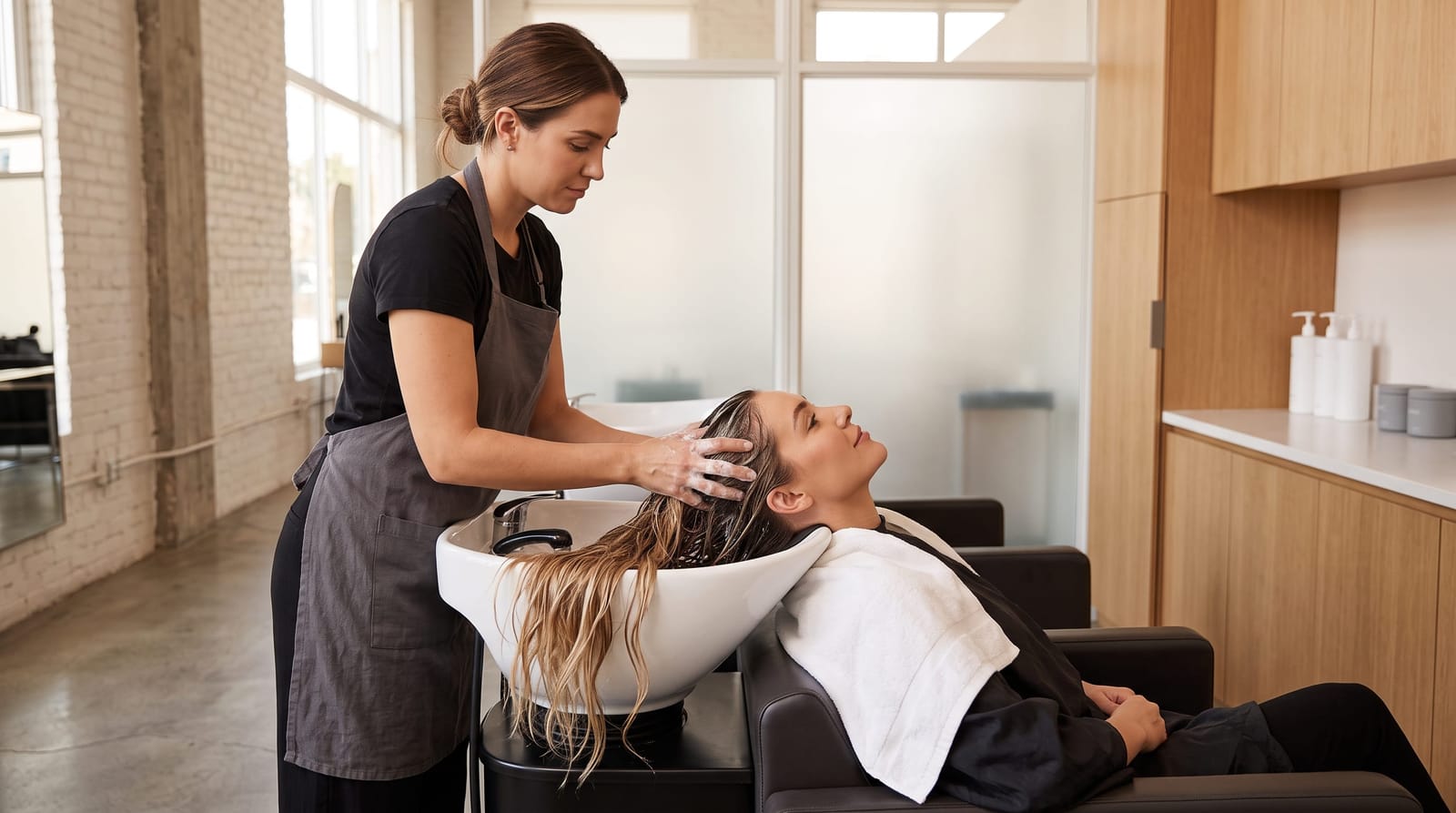
Even the best shampoo for hair extensions can underperform if the washing technique isn't right. Tape-in and sew-in extensions each have slightly different needs, but these core principles apply to both.
- Detangle before you wet your hair. Use a wide-tooth comb or a soft-bristle extension brush to gently work through any tangles from ends to roots before stepping into the shower. Wet tangles in extension hair are much harder to manage and increase the risk of matting.
- Use lukewarm water, not hot. Hot water can weaken tape adhesive and cause extension fibers to become frizzy. Aim for a comfortable warm temperature throughout your wash.
- Apply shampoo with a downward motion. Rather than piling hair on top of your head and scrubbing (which causes tangling and stresses bonds), apply shampoo directly to the scalp and work it down in a smooth, downward stroke. Avoid circular scrubbing near tape or weft attachment points.
- Rinse thoroughly. Shampoo residue left near bonds is one of the more common causes of buildup and irritation. Take extra time to ensure all product is rinsed clean.
- Apply conditioner to mid-lengths and ends only. Conditioner near tape bonds is one of the fastest ways to cause slippage. Keep moisture-rich products from about 2 inches below your bonds down to the tips.
- Pat, don't rub, dry with a microfiber towel. Rubbing creates friction that tangles and stresses extension hair. A gentle pressing and squeezing motion removes water without the damage.
- Allow extensions to dry fully before sleeping. Going to bed with damp extensions is a leading cause of matting. If you're short on time, a cool-setting blow dry at the roots followed by air drying the lengths works well.
How often you wash also matters. Most extension specialists recommend washing 2 to 3 times per week at most. Daily washing, even with a gentle formula, accelerates bond wear and dries out extension fibers faster than necessary. If you're managing your salon visit schedule around your extension care routine, the Hair Extension Maintenance Schedule: How Often Do You Need to Visit the Salon? covers exactly how to think through that timing.
Ingredients That Actively Protect Extension Hair
Just as some ingredients work against your extensions, others actively support them. When reading shampoo labels, look for:
- Argan oil: A lightweight oil that adds shine and softness to extension fibers without weighing them down or migrating toward bonds.
- Keratin hydrolysate: Helps reinforce the surface of extension hair, which doesn't benefit from your scalp's natural protein production.
- Panthenol (Vitamin B5): Adds moisture and improves manageability: particularly helpful for extension hair that can feel coarser over time.
- Glycerin: A gentle humectant that draws moisture into dry extension fibers without disrupting adhesive bonds.
The goal is a formula that treats extension hair with the same care you'd give to color-treated strands, because in many ways, the needs are very similar.
Frequently Asked Questions
Can I use dry shampoo between washes if I have tape-in extensions?
Yes, dry shampoo can be a helpful tool between wash days, but apply it carefully. Spray it at the roots only, avoid the tape bond area directly, and choose a formula that brushes out cleanly without leaving heavy residue. Buildup near the bonds over time can affect adhesion, so use dry shampoo as a refresh tool rather than a regular replacement for washing.
How often should I wash my hair if I have extensions?
Most extension wearers do best with 2 to 3 washes per week. Washing more frequently than that accelerates bond wear and dries out extension fibers over time. If your scalp runs oily, dry shampoo and lightweight scalp sprays can help you go longer between washes comfortably.
Is clarifying shampoo ever safe to use with extensions?
Clarifying shampoos are occasionally useful, roughly once a month, to remove product buildup from the scalp. However, they should never be used near tape bonds or weft attachment points. If you feel a deep cleanse is needed, it's worth discussing the right approach with your stylist at your next visit, since application technique matters significantly here.
Can I use the same shampoo on my extensions and my natural hair?
Yes, and in fact, using one consistent extension-safe shampoo across your entire head is the simplest and most effective approach. A quality sulfate-free formula will cleanse your scalp effectively while also treating your extension hair gently. There's no need to alternate products or use separate formulas for different sections.
The Bottom Line on Shampoo and Extension Care
Choosing the best shampoo for hair extensions comes down to one non-negotiable: sulfate-free. From there, look for moisture-supporting ingredients, avoid heavy silicones and alcohol-based formulas, and commit to a gentle washing technique that protects your bonds rather than stressing them. Options like Mermaid Extension Care, Redken All Soft, and Color Wow Color Security Shampoo each offer something slightly different, but all meet the core criteria. The right shampoo, combined with a consistent routine, keeps your tape-in or sew-in extensions looking beautifully natural far longer, and that's exactly the kind of effortless, polished result great extensions are meant to deliver.