Balayage Hair Color: The Complete Guide for Women Who Want Natural, Low-Maintenance Blonding
You've seen it on your morning commute, across the table at client lunches, and in nearly every "effortlessly beautiful" photo you've paused on while scrolling. That soft, sun-touched blonde that looks like you spent a long summer near the ocean, not three hours in a salon chair. It's not an accident, and it's not magic. It's balayage hair color, and it has quietly become the most requested color service among women who want beautiful, natural-looking results without constant upkeep.
If you're a busy professional woman over 35 who has been curious about balayage, or who has tried traditional highlights and felt like the grow-out was too obvious, the maintenance too demanding, or the result too "done", this guide was written specifically for you.
Over the next several sections, you'll learn exactly what balayage hair color is, how it differs from foil highlights and other techniques, who it works best for, what the experience looks like at IlonaR Style in Marina Del Rey, what results realistically last, and how to care for your color between appointments. By the end, you'll have everything you need to decide whether balayage is the right choice for your hair, your lifestyle, and your look.
Let's start at the beginning.
1. What Balayage Hair Color Actually Is (And Why the Name Matters)
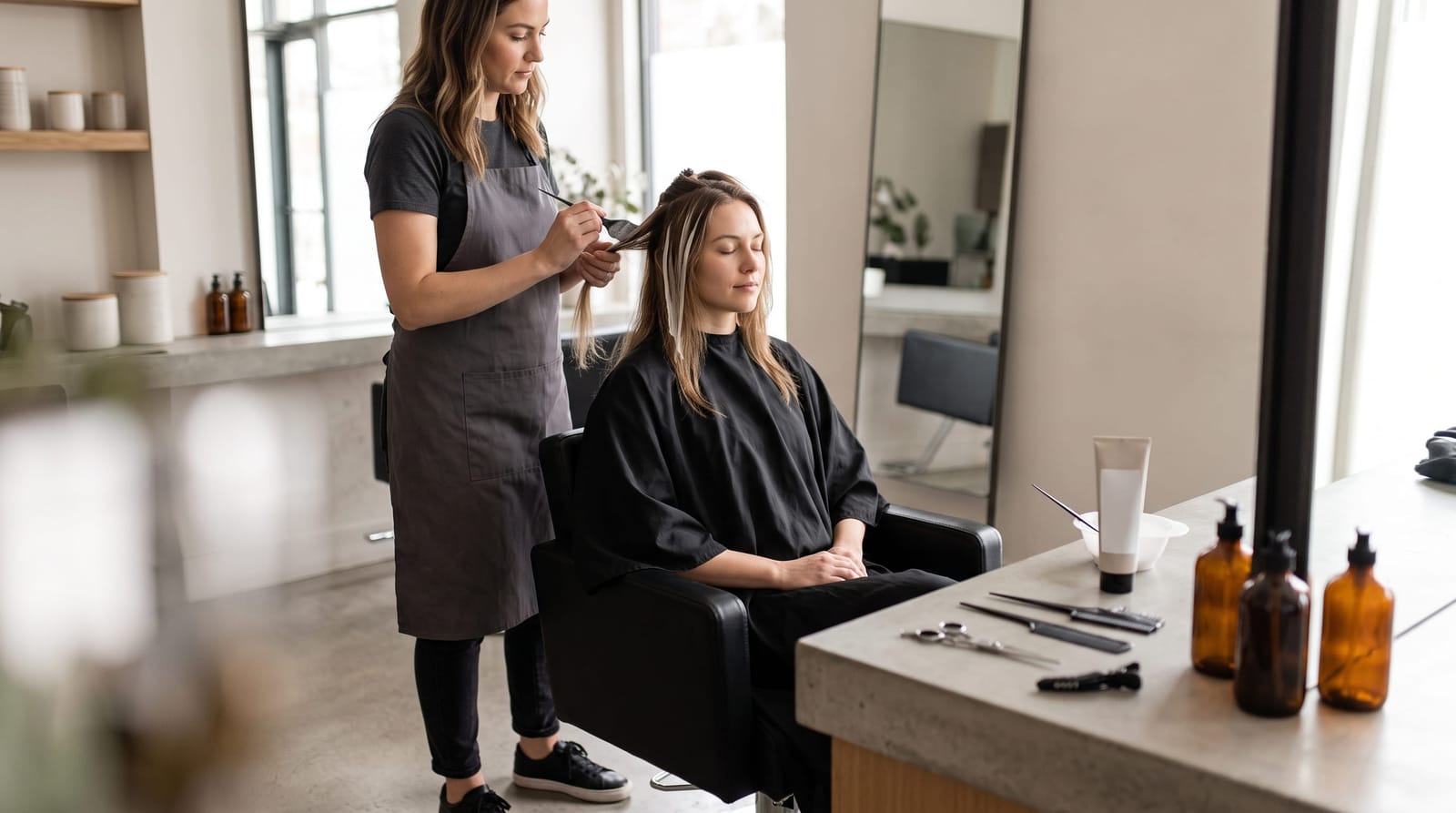
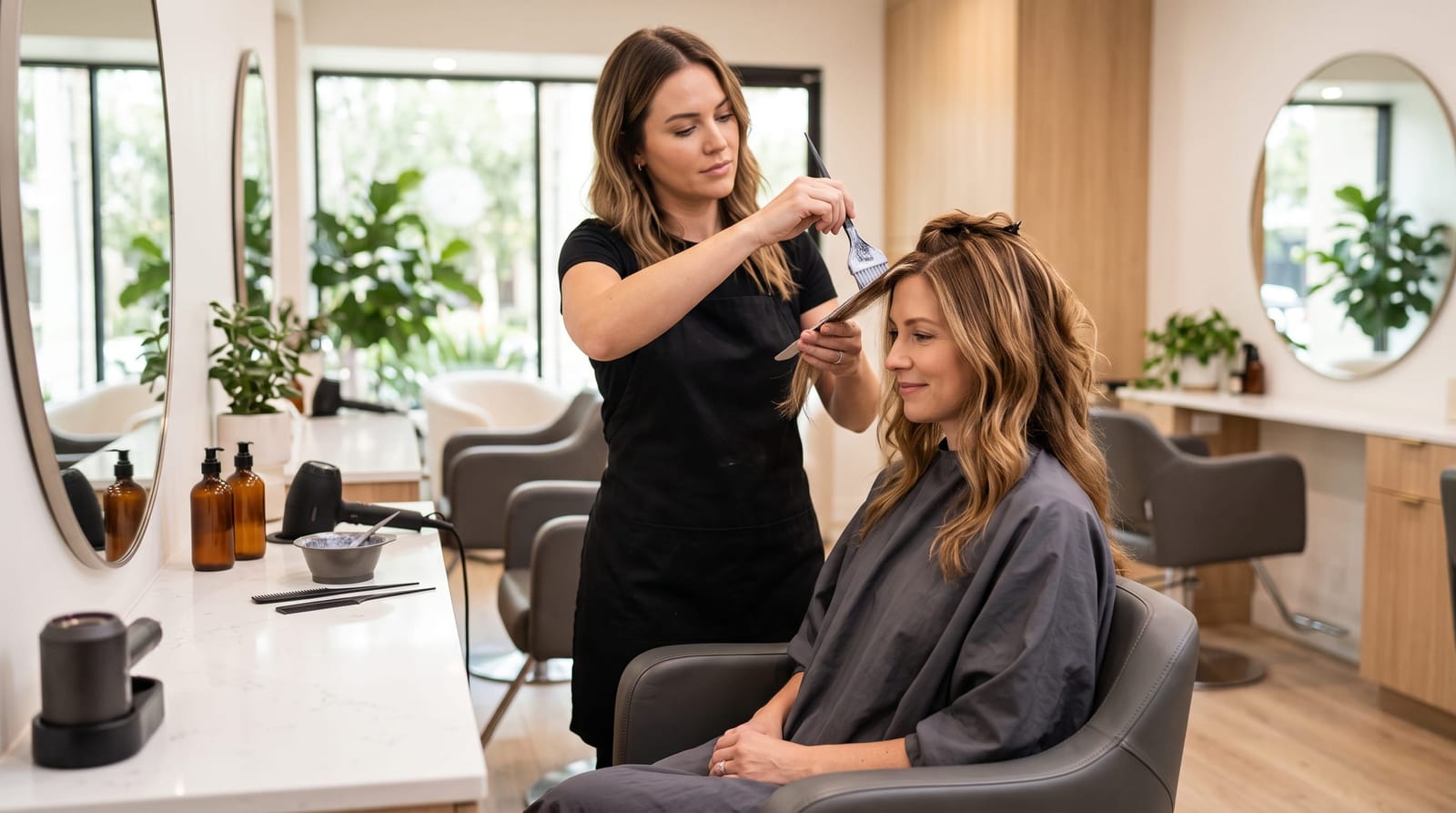
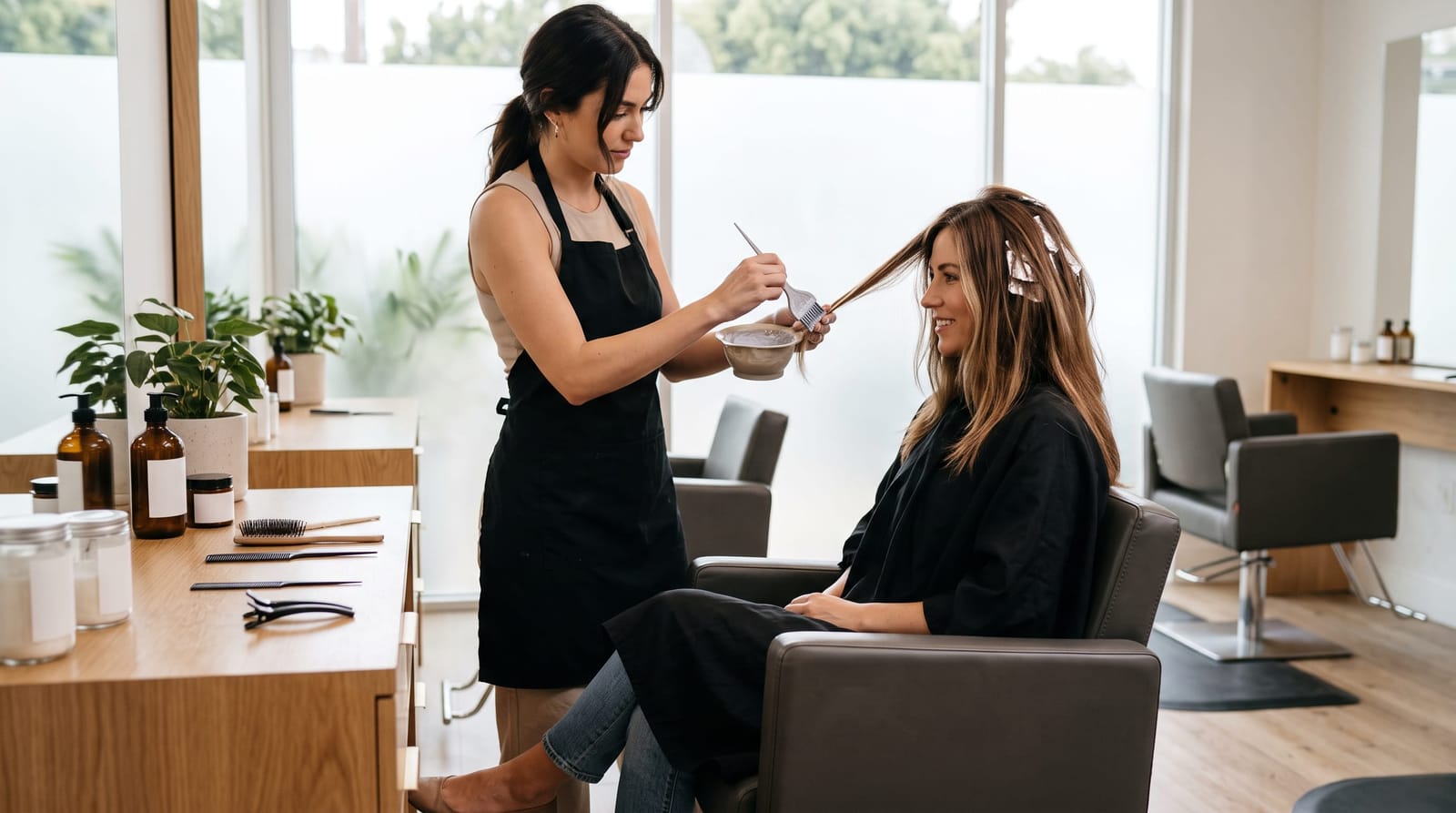
The word balayage comes from the French verb meaning "to sweep." That single word tells you almost everything about the technique. Rather than sectioning hair into precise, uniform pieces and enclosing them in foil packets, a skilled colorist paints lightener or color directly onto the surface of the hair in soft, sweeping strokes: working freehand, without foils, and without rigid formulas.
The result is a gradient of color that mimics exactly what the sun does naturally over time: lightening the ends and the surface of the hair while leaving the roots and underneath sections closer to their natural depth. Because the color is applied by hand in varying concentrations, heavier toward the ends, lighter toward the roots, there's no harsh line of demarcation as your hair grows out. The transition is seamless, organic, and genuinely beautiful at every stage of growth.
The Freehand Difference
What makes balayage hair color feel so different from traditional highlights is the freehand nature of the application. Every head of hair is unique in texture, density, growth pattern, and natural tone. A great balayage colorist reads your hair the way a portrait artist reads a subject's face, and paints accordingly. There's no template, no one-size-fits-all placement. That's precisely why two women can walk out of the same salon with balayage that looks entirely different on each of them, and both look stunning and completely natural.
This technique originated in French salons in the 1970s and has remained a cornerstone of high-end color work ever since. Its enduring popularity isn't a trend: it's a testament to how well it works across hair types, ages, and natural base colors.
Key Facts About Balayage
- Balayage means "to sweep" in French: the name describes the freehand painting technique
- Lightener or color is applied directly to the hair surface without foils
- Results typically last 8 to 12 weeks before a refresh is needed
- Most clients return for touch-ups 3 to 4 times per year, compared to every 6 to 8 weeks for traditional highlights
- Works on a wide range of natural base colors, from very dark brown to light blonde
- Creates a natural grow-out with no visible root line
2. How Balayage Differs From Traditional Highlights and Foils
One of the most common questions women ask before booking their first balayage appointment is: "How is this different from the highlights I've been getting?" It's a fair question: both techniques lighten the hair, and both are designed to add dimension. But the similarities mostly end there.
Traditional Foil Highlights
With traditional foil highlights, the colorist separates the hair into precise sections, applies lightener or color to each section, and wraps it in a foil to control the processing environment. The foil creates heat and allows for more controlled, consistent lightening from root to tip. The result is typically uniform, bright, and defined, which many women love for a classic blonde look.
The trade-off is maintenance. Because color is applied all the way to the root, you'll see regrowth within 4 to 6 weeks. That visible root line, especially on darker natural hair, requires frequent salon visits to maintain the look. Over time, that adds up in both time and cost.
Balayage Hair Color
Balayage hair color, by contrast, is applied mid-shaft to ends in most cases, with the concentration of lightener increasing toward the tips. Because the roots are intentionally left close to their natural color, there's no stark contrast as hair grows. Many women with balayage can comfortably go 10 to 12 weeks between appointments without their color looking grown out: it simply looks lived-in and natural.
Balayage also produces a softer, more dimensional result than foils. Rather than uniform, evenly spaced streaks of blonde, you get varying tones and depths that catch the light differently depending on how your hair moves.
Side-by-Side Comparison
- Application method: Foils use sectioned, foil-wrapped pieces; balayage uses freehand painting
- Root treatment: Foils color from root to end; balayage typically starts mid-shaft
- Grow-out: Foils show a visible root line in 4-6 weeks; balayage grows out seamlessly
- Maintenance frequency: Foils require visits every 6-8 weeks; balayage every 10-12 weeks
- Result: Foils create brighter, more uniform color; balayage creates soft, dimensional, natural-looking lightness
- Customization: Both can be customized, but balayage is inherently more tailored to each individual's hair
Neither technique is universally "better": the right choice depends on your hair, your goals, and your lifestyle. For a deeper look at this comparison, explore our guide on foil highlights vs balayage.
3. Who Balayage Hair Color Is Best For
Balayage hair color has broad appeal, but it's particularly well-suited to a specific kind of woman: one who values a polished, natural appearance but doesn't have the time, or the desire, to be in a salon chair every five or six weeks. If that sounds like you, you're in good company.
The Ideal Balayage Candidate
Women who tend to get the most from balayage share several characteristics:
- They want low-maintenance color. Balayage's seamless grow-out means you're not racing back to the salon to cover an obvious root line. Most clients comfortably go 10 to 12 weeks between sessions.
- They want a natural-looking result. If "I want it to look like I've always had this color" is something you've ever said to a colorist, balayage is likely your technique.
- They have medium to long hair. Balayage shows its best dimension on hair that's long enough for the gradient to develop: typically shoulder length and beyond. It can be adapted for shorter cuts as well.
- They're working with any natural base color. Balayage works beautifully on brunettes, blondes, and even darker hair, though darker starting points require more careful, multi-step lightening to protect hair health.
- They value hair integrity. Because balayage doesn't saturate the entire hair shaft with lightener, the overall impact on hair health can be gentler than full-coverage techniques, though this depends significantly on the starting color and how much lightening is involved.
Hair Types and Balayage
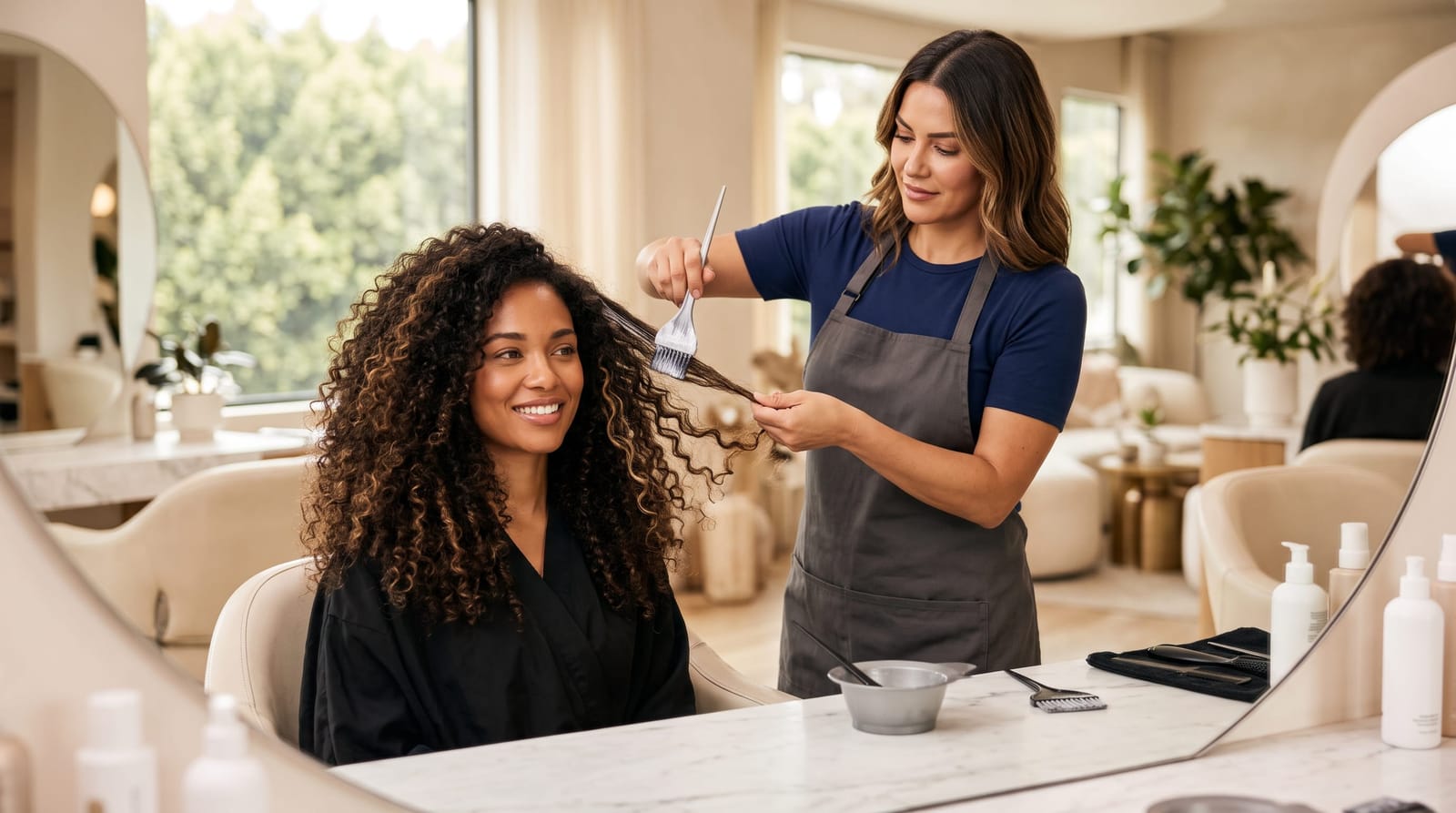
Balayage adapts well to most hair textures, but the way it's applied and how it shows up varies. On straight or wavy hair, the gradient is visible and fluid. On curly or coily hair, the technique requires specific placement to complement the curl pattern rather than fight it. The result on curly hair can be stunning, soft brightness that illuminates each curl, but it requires a colorist with experience in this specific application. Our dedicated guide on balayage curly hair covers this in detail.
For women considering going from significantly darker hair to a lighter blonde, balayage is often part of a multi-step process. A consultation with your colorist will establish a realistic roadmap for your transformation that keeps hair health at the center of the plan.
4. The Balayage Process at IlonaR Style: What to Expect
Walking into a new salon for a color service, especially a significant one, can feel uncertain, particularly if you've had color experiences in the past that didn't quite deliver what you had in mind. At IlonaR Style in Marina Del Rey, the balayage process is designed to be transparent, collaborative, and genuinely enjoyable from start to finish.
Step 1: The Consultation
Every balayage appointment begins with a thorough consultation. This isn't a brief, perfunctory chat: it's a real conversation about your hair history, your lifestyle, the look you're hoping to achieve, and any concerns you have about the process. Bring photos of color you love. Talk about what hasn't worked in the past. Share how often you realistically want to visit the salon. All of this shapes the approach.
Step 2: Color Formulation and Application
Once your colorist has a clear picture of your goals, she'll formulate the lightener and toning shades specifically for your hair. The application begins: freehand, without foils, with careful attention to where the light naturally falls on your hair and face. This is a detail-oriented process, and it takes time to do well. Expect the application itself to take 45 minutes to an hour and a half depending on your hair's length and density.
Step 3: Processing, Toning, and Finishing
After the lightener has processed (your colorist monitors this carefully throughout), your hair is rinsed and a toner is often applied. Toning is where balayage goes from "highlighted" to truly beautiful: it neutralizes unwanted brassiness and adds depth, translucency, and dimension to the color. After toning, a finishing treatment is applied to smooth the hair and enhance shine before the style is complete.
Realistic Timing Expectations
- Consultation: 15-20 minutes
- Color application: 45-90 minutes
- Processing time: 20-45 minutes
- Toning and rinse: 20-30 minutes
- Blowout and style: 30-45 minutes
- Total appointment: Typically 2.5 to 4 hours for a full balayage service
Plan for a full afternoon. This is not a rushed service, and the time invested is part of what makes the result look exceptional rather than hurried.
5. Balayage Hair Color Cost: What to Expect and Why It Varies
Cost is one of the most common questions surrounding balayage hair color, and it deserves an honest, straightforward answer. Balayage is typically priced higher than a single-process color or a basic highlight service, and there are good reasons for that.
Why Balayage Is Priced as a Premium Service
Balayage requires a high level of skill, artistry, and time. Unlike foil highlights, which follow a predictable formula, balayage demands that the colorist make dozens of individual judgment calls during application, where to place color, how much lightener to use in each section, how to frame the face, and how to create a gradient that looks natural on that specific person's hair. That expertise takes years of training and practice to develop.
Additionally, balayage appointments are longer than many color services. Longer chair time, higher-quality products, and individualized technique all factor into the price.
General Price Ranges
While pricing varies by salon, colorist experience, geographic location, and hair length and density, here is a general framework for understanding balayage hair color costs in the Los Angeles area:
- Partial balayage (focused on face-framing pieces or a specific section): typically starting around $150-$250
- Full balayage (all-over freehand color application): typically $250-$400+
- Balayage with toner: Toning is often an add-on service, typically $50-$100 additional
- Balayage on very long or very thick hair: May carry an additional charge based on product usage and time
These figures are general educational estimates: actual pricing at IlonaR Style is discussed during your consultation based on your specific hair and goals. The important context: because balayage requires touch-ups only 3 to 4 times per year (versus 6 to 8 times annually for traditional highlights), many women find the annual investment comparable or even less than they spent on more frequent traditional color appointments.
The Value Equation
Think about it this way: if a traditional highlight appointment costs $150 every 6 weeks, that's approximately 8 to 9 visits per year, totaling $1,200 to $1,350 annually. A balayage client visiting 3 to 4 times per year at $300 per visit spends $900 to $1,200, with less time in the salon and a more natural result throughout the year.
6. How Long Balayage Hair Color Lasts: And How to Make It Last Longer
One of the most appealing qualities of balayage hair color is its longevity. Most women can expect their balayage to look beautiful and intentional for 8 to 12 weeks after their appointment, and in many cases, even longer. The seamless grow-out means that even as your hair grows, the color continues to look natural rather than obviously grown out.
Factors That Affect How Long Your Balayage Lasts
- Your natural hair color: Darker bases may experience faster visual contrast as hair grows; lighter natural tones tend to have even more seamless grow-out
- Your hair's growth rate: Average hair grows approximately half an inch per month; faster growth means the gradient shifts more quickly
- Sun exposure: Significant sun exposure can lift color and cause brassiness faster, especially in Southern California's climate
- Heat styling frequency: Regular heat styling without protection can accelerate color fading
- Shampoo and product choices: Sulfate-heavy shampoos strip color; color-safe and sulfate-free formulas preserve it significantly longer
- Water quality: Hard water and chlorine (from pools) can affect color vibrancy over time
Best Practices for Extending Your Balayage
The good news: there are concrete steps you can take to keep your balayage hair color looking fresh and vibrant as long as possible. A few practices that make a meaningful difference:
- Use a sulfate-free, color-safe shampoo and conditioner formulated for color-treated hair
- Incorporate a purple or violet toning shampoo once or twice a week to neutralize brassiness between appointments
- Apply a heat protectant every time you use a blow dryer, flat iron, or curling iron
- Rinse hair with cool or lukewarm water rather than hot: heat opens the hair cuticle and accelerates color loss
- Use a deep conditioning mask weekly to maintain moisture and vibrancy
- Protect hair from prolonged sun exposure with a UV-protective hair product or a hat when spending extended time outdoors
- Rinse hair before swimming in a pool to reduce chlorine absorption
For a comprehensive look at balayage timing and what to realistically expect between appointments, our dedicated article on how long does balayage last walks through the full picture.
7. Choosing the Right Shade of Balayage for Your Skin Tone and Hair Type
Not all balayage looks the same, and that's exactly the point. The beauty of this technique is its adaptability. The same freehand method can produce a warm, honey-golden blonde on one woman and a cool, ashy platinum gradient on another. The key is choosing shades that complement your skin tone, flatter your natural base, and align with the level of maintenance you're comfortable with.
Warm vs. Cool Balayage Tones
In general, women with warm or olive skin tones tend to look their most luminous with warm balayage shades: golden blondes, caramel highlights, honey tones, and sun-kissed bronze. Women with cooler or fair skin tones often shine in ashier, more neutral blonde shades: champagne, pearl, beige blonde, or platinum gradients.
That said, these are guidelines, not rules. An experienced colorist will evaluate your unique complexion, eye color, and natural hair tone to make recommendations that are genuinely flattering, not just trendy.
Starting Base Color and What It Means for Your Result
- Light to medium brown hair: Excellent starting point for balayage; achieves beautiful golden or warm blonde tones in one or two sessions
- Dark brown to black hair: Requires more careful, multi-step lightening; can achieve stunning dimensional color, but the process takes longer and must prioritize hair health throughout
- Already-blonde hair: Often the most straightforward starting point; balayage can refine, brighten, or add depth to existing blonde color
- Previously color-treated hair: Requires a detailed consultation to understand how the existing color will interact with lightener
If you're starting from a significantly darker base and dreaming of a lighter blonde, the journey is absolutely achievable, but it's a process that benefits from patience and a trusted colorist partnership. Our guide on dark to light hair transformation covers everything you need to know about going blonde without compromising your hair's health.
And if you've been wondering whether balayage or another highlight method is the better fit for your specific goals, our comparison of balayage vs highlights can help you sort through the options clearly.
8. Caring for Your Hair Between Balayage Appointments
Beautiful balayage hair color doesn't maintain itself, but with the right routine, keeping it looking salon-fresh between appointments is genuinely manageable. The women who get the most from their balayage are the ones who invest a small amount of consistent care into their color between visits.
Building a Color-Preserving Routine
You don't need an elaborate 12-step haircare routine to maintain great balayage. A focused, intentional approach is far more effective than a complicated one. Here are the foundational elements of a smart balayage maintenance routine:
- Shampoo less frequently. Washing hair every two to three days (rather than daily) reduces color fade significantly. Dry shampoo is your friend between washes.
- Choose professional-grade products. The products you use at home matter more than most people realize. Salon-quality color-safe formulas are worth the investment: they're formulated to protect and preserve color rather than strip it.
- Tone at home between visits. A quality purple or brass-neutralizing shampoo used once or twice a week keeps warm tones from taking over and maintains the clarity of your blonde.
- Prioritize moisture. Lightened hair is more porous than unprocessed hair and benefits enormously from consistent hydration. A weekly deep conditioning mask keeps the hair smooth, shiny, and resilient.
- Protect before heat. Never skip heat protectant. It's one of the simplest, most impactful things you can do for color-treated hair.
When to Schedule Your Next Appointment
Most balayage clients return every 10 to 14 weeks for a refresh: this might include a gloss treatment, a toner refresh, or a full touch-up depending on how much the color has faded and how much new growth has come in. Your colorist will help you determine the right timeline for your specific hair during your appointment.
Signs it's time to book: the ends are looking dull or brassy, the gradient has faded more than you'd like, or you simply miss the brightness your fresh color gave you. Most women develop a feel for their personal balayage rhythm after one or two appointment cycles.
9. Deep Dive Topics: Explore the Full Balayage & Blonding Guide
This guide covers the essential foundation of balayage hair color, but there's much more to explore depending on your specific hair type, goals, and questions. The following articles go deeper into the details that matter most for your individual balayage journey:
- Foil Highlights vs. Balayage: Not sure which technique is right for you? Our side-by-side breakdown of foil highlights vs balayage helps you understand the key differences in application, result, maintenance, and cost, so you can walk into your consultation already informed.
- Dark to Light Hair Transformation: If you're starting from a brunette base and dreaming of blonde, this is essential reading. Our guide on dark to light hair transformation explains how colorists approach the lightening process safely and what a realistic multi-session timeline looks like.
- Balayage on Curly Hair: Curly and wavy hair requires a different approach to balayage placement and technique. Our article on balayage curly hair covers everything you need to know, including how to ensure your curl pattern enhances (rather than fights) your color.
- Balayage vs. Highlights: If you're weighing balayage against other highlight methods and want a clear, detailed comparison, our guide on balayage vs highlights walks through every major difference with honest guidance to help you choose.
- How Long Does Balayage Last?: Wondering exactly what to expect in the weeks and months after your appointment? Our dedicated article on how long does balayage last covers the full timeline, what affects longevity, and how to make your color last as long as possible.
Conclusion: Is Balayage Hair Color Right for You?
Balayage hair color has endured as one of the most beloved and requested color services for a simple reason: it works beautifully for real women living real lives. It delivers a natural, luminous, sun-kissed look that doesn't demand constant maintenance, doesn't scream "freshly colored," and grows out gracefully rather than awkwardly.
For the professional woman over 35 who wants hair that looks polished and effortless without endless salon visits, balayage isn't just a trend: it's a genuinely smart approach to hair color. With results lasting 8 to 12 weeks, a grow-out that's designed to look intentional, and a technique that's customized entirely to your unique hair and facial features, balayage hair color offers both elegance and practicality in equal measure.
At IlonaR Style in Marina Del Rey, every balayage service begins with a real conversation about what you want and ends with color that feels like the best version of your own hair. If you're ready to experience what thoughtfully crafted balayage can do for you, we'd love to start that conversation.
Book your balayage consultation at IlonaR Style today, and take the first step toward the natural, low-maintenance blonde you've been envisioning.